20-Day Kenya Birding Photography Tour | Nature Tours in East Africa
In addition to the avian wonders, enjoy thrilling encounters with Kenya’s famous wildlife. Expect to photograph Big Cats, Elephants, Rhinos, and the towering Masai Giraffes. With the guidance of our experienced birding and photography experts, you will capture stunning images while deepening your appreciation of Kenya’s natural beauty.
This Kenya Birding and Nature Tour promises not only incredible birding but also a commitment to conservation and responsible tourism. By joining this expedition, you are directly contributing to efforts that protect Kenya’s birds and wildlife habitats for future generations.
Day 1: Begin Your Bird and Wildlife Photography Tour in Nairobi – Kenya’s Premier Birding Destination
This exciting Kenya Birding Photography Tour begins today. Upon your arrival in Nairobi, we will greet you and get started. Depending on your arrival time, we head straight to Nairobi National Park. This unique wildlife sanctuary sits right next to the city.
Despite its urban setting, the park offers incredible birding opportunities. It is home to wetlands, thickets, and grasslands. The famous thorn trees provide shelter to many birds. Here, you will enjoy your first East African nature tour experience.
The striking African Wattled Lapwing photographed in Nairobi National Park during an Avian Safaris Kenya birding tour.
You can expect to see birds such as the Brown Parisoma, Red-throated Tit, and Northern Pied Babbler. All three are exciting finds for birdwatchers.
As we move through the park, we search for more special species. Look for the Rosy-throated Longclaw (Macronyx ameliae wintoni). Keep an eye out for the Cuckoo-Finch and African Silverbill.
Mammals and More at Nairobi National Park
The excitement does not stop with birds. Nairobi National Park is also home to many mammals. You may spot the White and Black Rhinoceros. You can also see Thomson’s and Grant’s Gazelles, African Lions, Leopards, and the tall Masai Giraffe.
As we explore, you will also likely encounter the African Harrier-Hawk, Red-faced Cisticola, and Singing Cisticola. We also hope to find the Abyssinian Thrush. On the ground, you may see the Three-banded Plover, Rufous-naped Lark (Mirafra africana athi), and Shelley’s Francolin (Scleroptila shelleyi uluensis).
By the end of today, you will already have an impressive bird list and wonderful photographs to treasure.
Day 2: Kenya Birding Photography Tour in Nairobi National Park
Today, we return to Nairobi National Park. The early morning light is perfect for bird photography. We will explore both familiar trails and new routes.
Our key targets include the Hartlaub’s Turaco, Yellow-necked Spurfowl, and Wattled Starling. With luck, we will also spot the Lesser Honeyguide. Every species offers something special for birdwatchers and photographers.
Hartlaub’s Turaco photographed in Kakamega Forest on an Avian Safaris Kenya Birding Photography Tour.
As we continue, we look for Superb Starlings and Hildebrandt’s Starlings. Listen for the Cape Robin-Chat. Watch the Jackson’s Widowbird and White-winged Widowbird perform their displays.
Birding Highlights You May Capture Today
On a typical morning here, we may find the African Water Rail and African Spoonbill. We will also search for the Lesser Swamp Warbler. Later, we hope to find the White-headed Barbet (Lybius leucocephalus senex) and Green-backed Honeyguide.
We often encounter the Green-capped Eremomela (Eremomela scotops kikuyuensis). Another target is the Highland Rush Warbler. With patience and good light, you will have many photo opportunities today.
Day 3: Kenya Birding Photography Tour to Naivasha and Kinangop Plateau
After breakfast, we leave Nairobi behind. Today, we travel towards Naivasha. Our first stop is the Kinangop Plateau, a high-elevation area known for birding.
This grassland habitat is home to many special birds. Our top target today is the Sharpe’s Longclaw. We will also search for the beautiful Golden-breasted Sunbird. In addition, we hope to spot the Yellow-crowned Canary and the colorful Cinnamon-chested Bee-eater.
More Bird Species to Watch For on Day Three
As we explore, we listen for the call of Hunter’s Cisticola. We also search for the Striped Crake, often hiding in dense grass. Groups of Quailfinches may cross our path.
With some luck, we may see the Long-tailed Widowbird (Euplectes progne delamerei) performing its display flight. Finally, for the keenest birders, there is a chance of spotting the secretive Striped Flufftail.
Day 4: Birding Journey to Masai Mara
This morning, we begin an exciting journey toward the Masai Mara Wildlife Reserve. As we travel, the scenery transforms. We cross vast open plains and dramatic escarpments. Along the way, we make stops to enjoy the birdlife that thrives here.
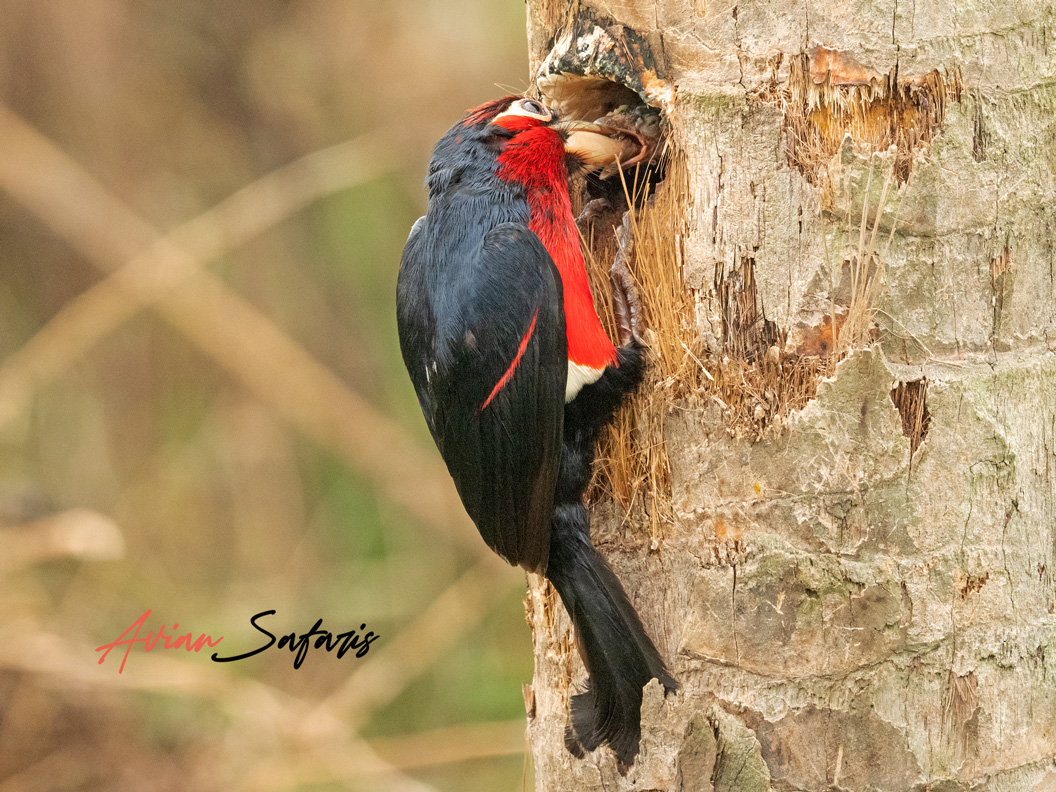
Usambiro Barbet seen on an Avian Safaris Kenya Birding Photography Tour in Masai Mara National Reserve.
The Whistling Thorn Acacias dot the landscape. These iconic trees are a magnet for many birds. We pause to search for localized species. Look for the White-bellied Canary, often perched high and singing. Overhead, you may spot the majestic African Goshawk soaring gracefully.
As we continue, we search for more treasures. Watch for the delicate Pale White-eye and the graceful Grey-headed Silverbill. Flocks of Swahili Sparrows and Northern Grey-headed Sparrows add energy to the scene.
Each bird we encounter offers a glimpse into Kenya’s unique ecosystems. By day’s end, we arrive at the Masai Mara, ready for the adventures that await.
Day 5: Birding and Photography on the Masai Mara Plains
Capturing Kenya’s Rich Avian Diversity
Today, we explore the Masai Mara National Reserve, one of the world’s most famous wildlife destinations. Our focus is on its rich birdlife. We travel along tracks that wind through open plains, acacia woodlands, and riverbanks.
As we head toward the Mara River and the Tanzania border, we search for the elusive Schalow’s Turaco. This striking bird is a true gem of East African birdlife. Nearby, we may find the regional endemic Rufous-tailed Weaver, busy at its intricately woven nest.
Spotted Morning Thrush photographed on an Avian Safaris Kenya Birding Photography Tour in Samburu National Reserve.
Throughout the day, we are rewarded with sightings of several species of larks. These include the White-tailed, Friedmann’s, Short-tailed, Singing, Foxy, Rufous-naped, and Athi Short-toed Larks. Watching them dart and dance across the grasslands is a delight.
Avian Highlights of the Masai Mara
Be sure to watch for the Rosy-throated Longclaw, its brilliant colors standing out against the grass. The Long-tailed Cisticola often sings from tall grasses, providing a beautiful soundtrack for the day.
Along the plains, we also look for the Yellow-throated Sandgrouse, the Black-winged Lapwing, and the aerial displays of the Mosque Swallow and Rufous-chested Swallow.
Above us, the skies are alive with raptors. We may spot the imposing Lappet-faced Vulture or the graceful African Marsh Harrier. On the ground, the Masai Ostrich struts proudly, while the small Kittlitz’s Plover scampers along riverbanks in search of food.
Each encounter is a highlight on this unforgettable Kenya Birding Photography Tour.
Day 6: Continuing the Conservation Journey
Birding Expedition from Masai Mara to Kisumu
Today, we spend our final morning in the Masai Mara. We take time to search for species we may have missed. Our guides will help us track down elusive birds like the Usambiro Barbet, a local subspecies closely related to the D’Arnaud’s Barbet.
Abyssinian Crimsonwing captured on an Avian Safaris birding photography tour in the Aberdare Mountains, Kenya.
After this morning’s birding, we begin our journey toward Kisumu. Along the way, we remain alert for new sightings. Be sure to have your binoculars ready! We watch for the Southern Grosbeak Canary and the elusive Mountain Grey Woodpecker. Both add unique sightings to our growing species list.
Birding on the Shores of Lake Victoria
Upon arrival in Kisumu, we explore the papyrus swamps and the lake shores. This area is part of the Lake Victoria Basin biome, home to several localized species. Our targets include the Papyrus Yellow Warbler, Papyrus Canary, and the stunning Papyrus Gonolek.
We also search for the Carruthers Cisticola, often heard before seen. With luck, we will have a high species count by the end of the day. This is a key destination on our Kenya Birding Photography Tour, offering excellent opportunities to photograph birds in unique wetland habitats.
Day 7: Exploring Kisumu and Birding Expedition to Kakamega Forest Reserve
Birding Along Lake Victoria’s Marshes
We begin our day at dawn, the prime time for bird activity. In the humid surroundings of Kisumu, we explore the marshes along Lake Victoria. This area is part of the unique Lake Victoria Basin biome. Here, we encounter species that we will not see anywhere else on our tour.
With keen eyes and ears, we listen for the calls of elusive birds. We hope to spot the White-winged Swamp Warbler, the bold Eastern Plantain-eater, and the dazzling Red-chested Sunbird. We also search for a variety of weavers. These include the Slender-billed, Golden-backed, Northern Brown-throated, Holub’s Golden, and Black-headed Weavers.
In addition, the Black-headed Gonolek and the charming Yellow-fronted Tinkerbird often make appearances. Watch for the elaborate displays of Winding Cisticolas and the lively Woodland Kingfisher. The calls of the African Reed Warbler and Greater Swamp Warbler create a rich soundscape.
Birding in Kakamega Forest Reserve
Later in the day, we head to Kakamega Forest Reserve. This lush forest is a haven for birdwatchers. It is home to rare species endemic to the Guinea-Congo forest biome.
As we explore Kakamega’s dense foliage, we prepare for an unforgettable day of birdwatching. This forest is not only a birding hotspot but also a vital sanctuary for endangered species. By visiting Kakamega, we support ongoing conservation efforts aimed at preserving its rich biodiversity.
Day 8: Birding and Photography Extravaganza in Kakamega Forest
Two Full Days of Avian Discovery
Today, we immerse ourselves in the wonders of Kakamega Forest. Our Kenya Birding Photography Tour offers two full days of birding in this biodiversity hotspot.
We search for the elusive Grey-chested Babbler (Kakamega poliothorax) and the diurnal Red-chested Owlet. As we wander through the forest’s green undergrowth, we watch for Turner’s Eremomela, Yellow-bellied Wattle-eye, and Chapin’s Flycatcher.
Highlights of Kakamega Birding
The colorful Blue-headed Bee-eater and melodious Joyful Greenbul are key targets today. Listen for the calls of the Grey-throated Barbet as we explore deeper into the forest.
We hope to see the Orange-tufted Sunbird and the majestic African Crowned Eagle soaring above the canopy. Other exciting species include the Purple-throated Cuckoo-shrike, Blue-shouldered Robin-chat, and Dusky-crested Flycatcher.
We will also search for Black-collared Apalis, Uganda Woodland Warbler, and Southern Hyliota. Among the treetops, we may glimpse the Green-throated and Olive-bellied Sunbirds, their colors flashing in the light.
Day 9: Birding and Photography Journey from Kakamega to Lake Baringo
From Lush Forests to Scenic Lakeshores
Today, we travel from the forests of Kakamega to the scenic shores of Lake Baringo. As we move across ponds, wheat fields, and escarpments, we remain alert for birdlife. Our Kenya Nature Tour continues with more exciting sightings.
Kori Bustard, the heaviest flying bird in Africa, captured on an Avian Safaris Kenya Birding Photography Tour in Tsavo.
After breakfast, we set out toward Lake Baringo, eager to explore its rich avian habitats. As we descend the Keiyo Escarpment, we scan the woods for several key species. We hope to spot the Boran Cisticola, Ross’s Turaco, White-crested Turaco, and the elusive Little Rock-thrush.
We make a special stop to search for Red-billed Buffalo-weaver and White-billed Buffalo-weaver. These birds are distinctive and full of character.
Afternoon Birding at Lake Baringo Lodges
Upon arrival at our lodge near Lake Baringo, we take time to relax and enjoy the tranquil setting. In the afternoon, we explore the lodge grounds, cameras at the ready. Likely sightings include the Black-throated Barbet, Northern Brownbul, and Eastern Violet-backed Sunbird.
Day 10: Exploring the Avian Splendor of Lake Baringo
Morning Boat Ride and Birdwatching Adventure
We begin our day with a peaceful boat ride on Lake Baringo. This allows us to reach remote cliffs and hidden coves teeming with birdlife. As we glide along the water, we watch for the elusive Brown-tailed Rock Chat and the striking Chestnut Weaver.
Along the shoreline, we may spot Hemprich’s Hornbill, Jackson’s Hornbill, Northern Red-billed Hornbill, and African Grey Hornbill. Each species offers exciting photography opportunities.
Orange-bellied Parrots observed during an Avian Safaris Kenya Birding Photography Tour in Samburu Reserve.
Birding in the Dry Woods and Thickets
Later, we venture into the nearby dry woods and thickets. Here, we search for brilliant Shining Sunbirds, Beautiful Sunbirds, and Hunter’s Sunbirds. The delicate Amethyst Sunbird and shy Grey Wren-Warbler are also possible sightings.
We keep watch for raptors such as the African Hawk-eagle and Lanner Falcon. Flocks of Bristle-crowned Starlingsand Magpie Starlings add to the spectacle.
Additional highlights include the Mouse-colored Penduline Tit, Somali Tit, Black Cuckoo-shrike, and Madagascar Bee-eater. With luck, we may see the massive Goliath Heron wading along the lake’s edge.
Night Birds of Lake Baringo
Our day ends with a search for nocturnal species. Guided by experts, we hope to find the Northern White-faced Owl, Slender-tailed Nightjar, and African Scops Owl. We may also encounter the Spotted Eagle Owl, Greyish Eagle Owl, and Heuglin’s Courser.
Day 11: Exploring Nyahururu’s Birding Adventure and Marmanet Forest
Morning Cliff Birding in Lake Baringo
We start the day at first light with a nourishing breakfast. Then, we head out to the cliffs near Lake Baringo for a final morning birding session. Armed with binoculars and cameras, we scan the rocky outcrops in search of species we may have missed.
Key targets include the colorful Red-and-Yellow Barbet and the tiny but striking Pygmy Batis. Every sighting adds excitement to our Kenya Birding Photography Tour and enriches our species list.
Transfer to Nyahururu
After our morning birding, we pack our luggage and bid farewell to the peaceful shores of Lake Baringo. We then begin our journey to Nyahururu. Along the way, we enjoy the scenic beauty of Kenya’s countryside. Rolling hills, verdant landscapes, and traditional farms provide a beautiful backdrop for the trip.
Exploring Marmanet Forest
On arrival at our resort in Nyahururu, we enjoy a well-deserved lunch. In the afternoon, we explore Marmanet Forest, a pristine and lesser-visited birding hotspot.
Here, we search for species like the elusive African Hill Babbler, the melodious Cinnamon Bracken Warbler, and the charming Mustached Tinkerbird. With luck, we may also spot the rare and colorful Abyssinian Crimsonwing, a highlight for any birdwatcher.
Day 12: Birding Photo Safari to Samburu National Park
Scenic Drive and Lunch Stop
This morning, we leave Nyahururu behind and journey toward Samburu National Park. The route is picturesque, with rolling hills and scenic valleys that make the drive an enjoyable part of our Kenya Nature Tour.
Vulturine Guineafowl, one of Samburu’s most colorful birds, photographed on an Avian Safaris Kenya Birding Photography Tour.
Depending on our timing, we enjoy lunch in Nanyuki, a charming town along the way. Alternatively, we may proceed directly to Samburu and enjoy a warm meal upon arrival.
Birdwatching in Buffalo Springs
In the afternoon, we dive straight into birdwatching in Buffalo Springs. This area boasts diverse birdlife and rich habitats. Our targets include the vibrant Golden Pipit, the elusive Somali Courser, and the striking Chestnut-headed Sparrow-lark.
We keep our binoculars ready for the Chestnut-bellied Sandgrouse, colorful Somali Bee-eater, and charming Black-bellied Sunbird. The varied landscapes of Buffalo Springs offer endless opportunities for bird photography.
Day 13: Full-Day Birding Photography in Buffalo Springs Reserve
Early Morning Start and Avian Exploration
After an early breakfast, we set off for a full day of birding in Buffalo Springs Reserve. This day promises a deep dive into one of Kenya’s most rewarding birding areas.
Encounters with Rare and Endemic Species During a Kenya Birding and Photography Tour
We explore grasslands, woodlands, and riverine habitats. Some of our sought-after species include the elusive Fire-fronted Bishop, striking Foxy Lark, and the rare Pink-breasted Lark.
Other highlights include the Scissor-tailed Kite, Pale Prinia, and the colorful Yellow-vented Eremomela. These species are often seen flitting among the acacias and thickets.
Thrilling Birdwatching Highlights
Throughout the day, we enjoy a variety of sightings. Listen for the melodic calls of the Ashy Cisticola and watch the Black-capped Social-weaver build its intricate nests.
Overhead, we may spot the soaring Black Eagle. On the ground, we search for Von der Decken’s Hornbill and Eastern Yellow-billed Hornbill, both common in the area.
Exploring Varied Habitats
The habitats in Buffalo Springs Reserve are remarkably diverse. We scan the open plains for the elusive Rosy-patched Bushshrike (Telophorus cruentus hilgerti). In the denser thickets, we look for the secretive Bare-eyed Thrush.
Every corner of Buffalo Springs holds a new discovery, making this a highlight of our Kenya Birding Photography Tour.
Day 14: Samburu Reserve on a Kenya Birding Photography Tour
Early Breakfast and Reserve Exploration
We start with an early breakfast before entering Samburu Reserve through Archer’s Post Gate. This reserve offers an excellent opportunity to immerse ourselves in the natural beauty of Kenya’s dry northern regions.
Prime Birding Locations and Key Species
As we traverse the reserve, our expert guides take us to the best birding locations. We hope to see the Northern Grosbeak Canary, the elegant Steel Blue Whydah, and the tiny Somali Crombec.
Raptors such as the Tawny Eagle and Wahlberg’s Eagle are often seen soaring overhead. On the ground, we may spot the impressive Buff-crested Bustard and the sharp-eyed Eastern Chanting Goshawk.
More Birding Highlights in Samburu
African Scops Owl perfectly camouflaged at Lake Baringo on an Avian Safaris Kenya birding and photography adventure.
Throughout the day, we continue our search for rare and localized species. The elusive Stone Partridge may be found hidden among rocky outcrops. Above the savannah, we watch for the graceful Straw-tailed Whydah.
In the foliage, we keep an eye out for flashes of color. Key sightings may include the Golden-breasted Starling and Fischer’s Starling, both prized for their brilliant plumage.
Day 15: Birdwatching Adventure to Nyeri
En Route to Birding in Aberdare Mountains
After breakfast, we bid farewell to the captivating landscapes of Samburu Reserve. Today, we journey toward Nyeri, the gateway to the stunning Aberdare Mountains. With memories of Samburu’s birdlife still fresh, we look forward to discovering new species in these highland forests.
Scenic Drive to Nyeri
As we travel through the picturesque countryside, the views are breathtaking. Rolling hills, lush valleys, and deep escarpments create a beautiful backdrop. Along the way, we keep our eyes open for bird species that frequent these farmlands and forest edges.
Anticipation of Aberdare’s Avian Diversity
Our excitement builds as we approach Nyeri. The Aberdare Mountains are home to a variety of unique habitats, including montane forests and alpine moorlands. These support many rare and endemic bird species, promising exciting discoveries on this leg of our Kenya Nature Tour.
Today, we explore Aberdare National Park, home to a rich variety of birdlife. We travel by vehicle, stopping at prime birding spots along the way. The roadsides offer excellent views of Jackson’s Francolin, Scaly Francolin, and the high-elevation Moorland Chat.
Capturing Aberdare’s Avian Specialties
As we ascend towards the moorland zone, we search for the Aberdare Cisticola, a local specialty. Other highlights include the elegant Slender-billed Starling and the colorful Red-throated Wryneck.
We also hope to spot the elusive Brown Woodland Warbler and White-eared Barbet. Each sighting presents a fantastic opportunity for bird photography and nature appreciation.
Days 17 and 18: Birding Adventure on Mount Kenya
Daytime Birding Excursions
For the next two days, we explore the rich bird habitats of Mount Kenya. Morning birding excursions take us along forest roads, where we search for highland specialties. Key species include Abbott’s Starling, Kenrick’s Starling, Black-fronted Bush-shrike, and Fine-banded Woodpecker.
We also hope to spot the colorful Red-fronted Parrot and the elusive Rufous-breasted Sparrowhawk. In the undergrowth, we listen for Ruppell’s Robin-chat and search for Abyssinian Crimsonwing and Kandt’s Waxbill.
Buff-crested Bustard sighted on an Avian Safaris Kenya Birding Photography Tour in Samburu Reserve.
Midday Rest and Lunch
After a productive morning, we return to our accommodations for a rest and a hearty lunch. This time allows us to recharge and reflect on the morning’s birding highlights.
Afternoon Birdwatching and Dusk Excursions
In the late afternoon, we resume our birdwatching activities. As the light softens, we search for the elusive Olive Ibis. We also listen for the haunting calls of the Montane Nightjar, adding an enchanting close to each day on Mount Kenya.
Day 19: Birding Through the Mwea Irrigation Scheme
Today, we begin our return journey to Nairobi. Along the way, we stop at the Mwea Irrigation Scheme, a productive wetland area. Here, we hope to spot Lesser Moorhen, Allen’s Gallinule, and the bright Yellow-crowned Bishop.
A highlight of the day is the chance to see the elusive and endemic Hinde’s Babbler, a species found only in this region. This final birding stop adds a fitting conclusion to our Kenya Birding Photography Tour.
Day 20: Departure
Contributing to Conservation and Sustainable Travel
As our journey comes to an end, we reflect on the birds and wildlife we have encountered. This tour was more than a birdwatching experience; it was a chance to support conservation and promote awareness of Kenya’s rich biodiversity.
By practicing sustainable travel and responsible tourism, we contribute to safeguarding these vital habitats. Your participation helps ensure that Kenya’s birdlife will thrive for generations to come.
Frequently Asked Questions (FAQs): Kenya Birdwatching Safaris | Africa Guided Safari
1. What is the best time to do the Kenya birdwatching safari?
The ideal time for bird watching in Kenya is from November to April, during the breeding season when birds display vibrant plumage and migratory species from Europe and Asia arrive. However, Kenya Bird Watching Safaris are rewarding year-round, with resident birds and spectacular wildlife viewing opportunities.
2. How many bird species can I expect to see during this 29-day safari?
Kenya boasts over 1,100 recorded bird species. On this Africa Guided Safari, you can expect to encounter over 700 species, including endemics like Jackson’s Francolin, Sharpe’s Longclaw, and regional specialties such as the Spotted Ground Thrush and Heuglin’s White-eye.
3. Is this Kenya birdwatching safari suitable for beginners?
Absolutely! Our Kenya Birdwatching Safaris are designed for all experience levels, from novice birders to seasoned ornithologists. Ourexpert guidesprovide support in bird identification, photography tips, and ensure a rewarding learning experience.
4. What other wildlife will I see on this Kenya Birdwatching Safari?
In addition to birds, you’ll encounter Africa’s Big Five (Lion, Leopard, Elephant, Buffalo, and Rhino), along with Cheetahs, Giraffes, Hippos, Crocodiles, and an array of antelope species. The journey also includes photographic opportunities of rare mammals like the Gerenuk and Grevy’s Zebra.
5. What should I pack for a Kenya birdwatching safari?
We recommend lightweight neutral-coloured clothing, sturdy walking shoes, binoculars (8×42 or 10×42 are ideal), a good camera with zoom lens, a bird field guide, sunscreen, insect repellent, and personal medications. Don’t forget a notebook for your birding checklist!
6. Is this safari eco-friendly and responsible?
Yes! Avian Safaris prioritizes sustainable tourism practices. We support local conservation initiatives, respect wildlife and habitats, and contribute to community-based tourism to ensure a positive impact on both nature and local livelihoods.
7. Do I need a visa for Kenya?
Yes, most nationalities require an e-visa to enter Kenya. It’s recommended to apply online before travel. Check the official Kenyan immigration website for updated information on visa requirements.
8. Can I customise the 29-day Kenya Birdwatching Safari?
Definitely! Avian Safaris offers tailor-made itineraries to suit your specific interests, schedule, and budget. Whether you prefer more time in certain reserves or want to add cultural experiences, we can customise your Kenya Birdwatching Safari.
9. Are all the locations safe for travel?
Yes, Avian Safaris ensures all destinations are carefully selected for safety, comfort, and prime birding opportunities.
Conservation Note: Supporting Birdlife & Habitat Protection in Kenya
At Avian Safaris, we believe that bird watching and responsible tourism play a crucial role in conserving Kenya’s unique biodiversity. Each Kenya Birdwatching Safari directly contributes to community empowerment and wildlife conservation. We collaborate with organizations like the East African Bird Monitoring Network and support habitat protection initiatives across Kenya’s critical bird areas (IBAs).
By choosing Avian Safaris for your Kenya Birdwatching Safari, you are:
Supporting local guides and community-owned eco-lodges
Promoting ethical wildlife viewing practices
Contributing to ongoing efforts to protect endangered species like Sharpe’s Longclaw, Sokoke Scops Owl, and Hinde’s Babbler
15-Day Northern Tanzania Birding Tour: Endemics & Iconic Landscapes
Day 1: Arrival in Arusha for the 15-Day Northern Tanzania Birding Tour
Our Northern Tanzania Birding Tour begins with the arrival to Arusha, the lively hub for northern Tanzania’s travel experiences. Upon arrival at Kilimanjaro International Airport or Arusha Airport, you will be welcomed by your expert guide, who will provide a warm introduction and transfer you to your lodge. The drive itself offers an opportunity to spot common yet exciting species like Variable Sunbird, Bronze Sunbird, and African Paradise Flycatcher flitting among the roadside greenery.
The lodge gardens provide a peaceful retreat after your journey, with species such as Speckled Mousebird, Green-backed Camaroptera, and Scarlet-chested Sunbird frequently seen.
Day 2: Bird Watching to Arusha National Park
We visit Arusha National Park, a stunning reserve located at the base of Mount Meru. The park is known for its diverse habitats, from montane forests and savannahs to the alkaline Momella Lakes, making it a birding hotspot.
In the montane forests on the lower slopes of Mount Meru, we will search for iconic species for Hartlaub’s Turaco, the elusive Narina Trogon, and the local specialty Taveta Golden Weaver, often seen near streams. Through the forested trails, we listen for the drumming of the Golden-tailed Woodpecker and the mimicry of the melodious Rüppell’s Robin-chat.
The critically endangered Beesley’s Lark (Chersomanes beesleyi) captured in its natural habitat—a remarkable find during our Tanzania Birdwatching Safaris guided by expert Tanzanian birding professionals
We bird to the Momella Lakes for waterbirds. Expect sightings of African Jacana, White-backed Duck, and the elegant Lesser Flamingo. Raptors like the majestic Crowned Eagle and Martial Eagle may soar overhead. The open grasslands around the lakes often host species like Yellow-throated Longclaw, Cinnamon-chested Bee-eater, and African Hoopoe.
Day 3: Birding the Lark Plains – Northern Tanzanian Birding Tour
One of the tour’s highlights is the Engikaret Lark Plains, a volcanic ash habitat that supports rare and localized bird species. This area is the stronghold for the critically endangered Beasley’s Lark, the day’s top target. Early in the morning, we will trek across the plains, scanning for larks like Red-capped Lark, Sentinel Lark, and Fawn-colored Lark.
The gullies and acacia scrub surrounding the plains offer additional opportunities. Nesting species such as White-fronted Bee-eater, Abyssinian Wheatear, Little Rock Thrush and Lyne’s Cisticola are commonly found here. With careful observation, we may also find Chestnut-bellied Sandgrouse and Long-billed Pipit, rounding off a productive morning.
The afternoon provides time to explore the surrounding pastoralist landscapes, offering glimpses of the local Maasai culture alongside sightings of species like Bronze Sunbird and Kenya Rufous Sparrow.
The Ashy Starling (Lamprotornis unicolor), endemic to Tanzania’s savanna regions, spotted during our Tanzania Birdwatching Safaris led by expert Tanzanian Birding Guides
Day 4: Birding to Tarangire National Park
This morning, we head west toward Tarangire National Park. As we approach the park, the scenery transforms into a stunning landscape of rolling hills dotted with iconic baobab trees and acacia woodlands. Known for its bird diversity and large elephant herds, Tarangire is a dry-country paradise.
Once inside the park, we will encounter some of its iconic species. Baobab trees at the park’s entrance are often alive with flocks of Yellow-collared Lovebird, Swahili Sparrow, and Pale White-eye. The open savannahs are home to ground-dwelling birds such as Double-banded Courser, Buff-crested Bustard, and the colorful Red-and-yellow Barbet.
As we move deeper into the park, the Tarangire River becomes a focal point for birdlife. Waterbirds like Yellow-billed Egret, Great Egret, and African Openbill congregate here, while the adjacent woodlands are frequented by Ashy Starling, Rufous-tailed Weaver, and Eastern Grey Woodpecker. The afternoon offers excellent opportunities to observe these species as the light softens.
Day 5: Full-Day Birding in Tarangire National Park
We spend the entire day in Tarangire’s diverse habitats, from riverine woodlands to expansive grasslands. Early morning drives are particularly rewarding as the park comes alive with activity. Scan the open plains for species like Chestnut-bellied Sandgrouse, Yellow-throated Sandgrouse, and White-bellied Bustard, which are often seen walking or feeding in the grass.
In the mid-morning, we focus on the woodlands, where mixed flocks may include Green-winged Pytilia, D’Arnaud’s Barbet, and the striking Eastern Violet-backed Sunbird. Raptors such as Bateleur, Martial Eagle, and Eastern Chanting Goshawk are frequently seen soaring above the park.
The Hartlaub’s Bustard (Lissotis hartlaubii), a striking bird of Tanzania’s open grasslands, captured during our Tanzania Birding Photography Tour.
In the afternoon, we return to the river area, where waterbirds such as African Spoonbill, Hammerkop, and Sacred Ibis forage along the banks. The surrounding thorn-trees are often alive with activity, hosting Grey-headed Kingfisher, Vitelline Masked Weaver, and the agile Pale Flycatcher. Lucky evenings reveal nocturnal species like Verreaux’s Eagle-Owl and the miniature African Scops-Owl whose territorial vocalizations echo across the savannah.
Day 6: Morning Birding in Tarangire and Transfer to Karatu
We enjoy a final morning of birding in Tarangire, focusing on species we may have missed. Early hours around the river offer chances to see African Fish Eagle, Malachite Kingfisher, and Little Bee-eater perched along the banks. Baobab trees near the lodge may yield sightings of Red-bellied Parrot and Swahili Sparrow, while the open plains remain excellent for spotting Double-banded Courser, Long-crested Eagle, Little Sparrowhawk, Black-bellied Bustard, Grey-headed Kingfisher and Bronze Mannikin.
Later we travel to Karatu, a charming town at the gateway to the Ngorongoro Conservation Area. The drive offers birding opportunities as we pass through varying dry habitats
Begin the day with a thrilling morning in the Ngorongoro Conservation Area. Descend into the famous Ngorongoro Crater, a UNESCO World Heritage Site and one of Tanzania’s most iconic birding and wildlife destinations. The crater’s unique mix of grasslands, forests, and wetlands supports a remarkable diversity of birds.
The elegant Chestnut-banded Plover (Anarhynchus pallidus venustus) feeding in the mudflats—a prized sighting from our Tanzania Birding Photography Tour
At the crater floor, target key species like Schalow’s Wheatear, Pectoral-patch Cisticola, and the beautifully patterned Chestnut-banded Plover, often seen along the shores of the Magadi crater lakes. Waterbirds such as Cape Teal, Fulvous Whistling Duck, and Great Egret are abundant. The grasslands are excellent for spotting Usambiro Barbet, Capped Wheatear, and Red-capped Lark.
Day 8: Birding to Serengeti National Park on the Northern Tanzania Birding Tour
We will drive through the famous Ngorongoro again doing a few birding spots around its geo-thermal water filled spots for shore birds, we hope to find good ducks like Knob-billed Ducks, Northern Shoveler, Cape and Blue-billed Teals, Red-billed, Maccoa, Fulvous and White-faced Whistling Ducks.
Days 9 & 10: Birding Serengeti National Park
The next two days are dedicated to exploring the Serengeti, a world-renowned destination for its iconic landscapes and extraordinary wildlife. The park’s expansive plains, broad-leaved and thorn woodlands, and scattered kopjes support a staggering diversity of bird species, making it one of the highlights of this 15-day Northern Tanzania birding tour.
we begin each day with early morning game drives, where the cool temperatures encourage activity among both birds and mammals. On the open plains, we scan for species such as Kori Bustard, Crowned Lapwing, and Secretarybird as they forage in the short and tall grass. We will look for the vibrant Fischer’s Lovebird, often perched on acacia trees, and the rare Masai Apalis, which prefers the scrubby edges of wooded areas.
Mixed flocks near wooded areas should reveal Hildebrandt’s Starling, Grey-capped Social Weaver, and the Rufous-tailed Weaver, a near-endemic of the Tanzanian savannahs. The riverine habitats along seasonal watercourses host Yellow-throated Sandgrouse, Grey-headed Kingfisher, and the colourful White-headed Barbet.
The Serengeti is also a haven for raptors. We watch for soaring Bateleur, Martial Eagle, and Lappet-faced Vulture against the endless sky. Woodland edges provide opportunities to find smaller species like African Scops Owl and Pygmy Falcon. As the day cools, search for Chestnut-bellied Sandgrouse and Double-banded Courser on the drier plains.
The Serengeti experience fills with spectacular wildlife, including elephants, lions, and cheetahs, offering thrilling encounters alongside exceptional birding.
Day 11: Morning Birding and Transfer to Arusha
This morning we bird our way to Arusha, with scenic views and optional roadside birding stops along the way.
Day 12: Bird Watching to West Usambara Mountains
We treat ourselves to a little the expansive Eastern Arc Mountains can offer. We transfer to West Usambara Mountains, where the cool montane climate and lush landscapes should reveal more national endemics.
Spot the vibrant Usambara Double-collared Sunbird (Cinnyris usambaricus) on a birdwatching tour in Tanzania. A stunning highlight for bird photographers and nature enthusiasts exploring the Usambara Mountains.
Northern Tanzania Birding Tour Day 13 & 14: Magamba Forest
We will explore Magamba Forest, one of the richest birding sites in the West Usambara Mountains. This recovering forest offers diverse habitats, from bracken-covered clearings to dense evergreen thickets. The forest hosts sought-after species, including White-chested Alethe and the Spot-throat whose distinctive call gives away its presence in the undergrowth.
Search for the rare Usambara Akalat, known for its skulking behaviour. In additions, we look for mixed flocks containing Stripe-faced Greenbul, Usambara Greenbul, and Moustached Tinkerbird. Other highlights include Usambara Weaver, African Tailorbird, Usambara Thrush, as well as Brown Woodland Warbler, Mountain Yellow Warbler and Fulleborn’s Sooty Boubou.
The forest edges are excellent for spotting Black-fronted Bush-shrikes, Mountain Wagtail and Yellow-bellied Waxbill. Whereas the higher elevations of the forest may yield sightings of Red-faced Crimsonwing, Mountain Buzzard, and White-tailed Crested Flycatcher.
Black-fronted Bushshrike (Chlorophoneus nigrifrons). A striking bird with its vibrant yellow plumage and black mask, captured during one of our Tanzania Birdwatching Safaris[/caption]
Kenya Leisurely Birding Tour – 14 Days: Adventure at a Relaxed Pace
We have the chance to find regional specialties and endemic species such as the Hartlaub’s Turaco, Papyrus Gonolek, Jackson’s Francolin, and Tacazze Sunbird. With plenty of time to observe, photograph, and enjoy each habitat, this tour strikes the perfect balance between adventure and comfort.
Our expert guides and friendly team ensure a seamless experience for both seasoned birders and casual naturalists. Every day offers new birding opportunities, cultural experiences, and wildlife surprises, making this tour ideal for anyone looking to explore Kenya’s stunning landscapes and extraordinary biodiversity—at a leisurely pace.
Day 1: Arrival For the Kenya Leisurely Birding Tour
This marks the beginning of an unforgettable Kenya Birdwatching Safari, promising incredible sightings and lifelong memories. After a short briefing and introductions, we transfer to your Nairobi hotel for check-in, relaxation, and an overview of the exciting days ahead.
Day 2: Birding Gatamaiyu Forest & Transfer to Crater Lake Sanctuary
Morning Birding in Gatamaiyu Forest on a Kenya Leisurely Birding Tour
We depart early for an immersive birding excursion in the enchanting Gatamaiyu Forest, part of the larger Kikuyu Escarpment ecosystem. This lush forest is renowned for its rare and regionally restricted species. Among the day’s highlights are:
Bar-tailed Trogon
Evergreen Forest Warbler
Golden-winged Sunbird
Eastern and Northern Double-collared Sunbirds
Cabanis’s Greenbul
Tropical Boubou
Black-fronted Bush-shrike
Hartlaub’s Turaco
The forest is alive with bird calls as we explore its trails. We should expect rich photographic opportunities and the thrill of spotting forest specials.
Northern Pied Babbler spotted during Avian Safaris’ Kenya Leisurely Birding Tour near Nairobi.
Afternoon Kenya Leisurely Birding Tour at Crater Lake Sanctuary
In the afternoon, we explore the bird-rich Crater Lake Sanctuary. Expect sightings of:
Grey-crested Helmetshrike (East African endemic)
Red-throated Tit (East African endemic)
Little Rock Thrush
Superb Starling
Hilberbrandt’s Starling (East African endemic)
Hilberbrandt’s Francolin
We conclude the day with a leisurely dinner and overnight stay at Naivasha
After breakfast, we depart for the world-famous Masai Mara National Reserve, one of Africa’s richest wildlife destinations. Along the way, we stop at various habitats to maximize bird sightings. Highlights en route include:
Two-banded Courser
Silverbird
Straw-tailed Whydah
Mixed flocks of swifts: Little Swift, Horus Swift, Alpine Swift, Nyanya Swift, White-rumped Swift, Common Swift, and African Palm Swift.
We arrive in time for lunch at our Masai Mara safari camp. Afterward, we enjoy casual compound birding, targeting species like:
Usambiro Barbet
Bare-faced Go-away-bird
Yellow Bishop
Red-faced Cisticola
Later in the afternoon, we explore the riverine habitats along the Talek River, home to an abundance of birdlife and wildlife. Birds of note include: African Green Pigeon, Grey Kestrel and Coqui Francolin.
Day 4: A Kenya Leisurely Birding Tour in the Heart of Masai Mara
After breakfast, we venture on an exciting full-day birding expedition into the heart of Masai Mara National Reserve. Equipped with packed lunches and binoculars, we venture deep into the reserve’s pristine wilderness. Throughout the day, we focus on locating a wealth of bird species thriving in this iconic landscape.
Keep an eye out for the striking Rosy-breasted Longclaw, Rufous-tailed Weaver, and the distinctive Magpie Shrike. Other highlights include the elegant Secretary Bird, the vivid Schalow’s Turaco, Yellow-throated Sandgrouse, Hooded Vulture, Lappet-faced Vulture, Black-winged Plover, and Temminck’s Courser. As we scan the skies, we often spot a variety of soaring raptors, adding to the day’s excitement.
Rufous-tailed Weaver in Kenya | Birdwatching Safari Photo
Afternoon: Mara River Crossing and Wildlife Encounters
We reach the famous Mara River crossing point, renowned for the dramatic wildebeest migration. Witness thousands of Brindled Gnu (wildebeests) braving the crocodile-infested waters in one of nature’s most awe-inspiring spectacles. While observing this dramatic event, we also focus on riverine birdlife, which includes water-associated species rarely seen elsewhere.
We should pause to take in the distant views of the Serengeti across the border, the experience adds another layer of wonder to our day.
Day 5: Kenya Leisurely Birding Adventure in Masai Mara – Another Full Day Safari
Early Morning: Into the Wild Savannah
We rise early for another full day of birding and wildlife photography in the Masai Mara. Today’s focus extends beyond birds to the region’s elusive mammals and predators.
Look out for Leopards, Serval Cats, and Bat-eared Foxes in the early light. Meanwhile, the skies come alive with impressive raptors such as Rüppell’s Vulture, White-backed Vulture, White-headed Vulture, Lesser-spotted Eagle, Wahlberg’s Eagle, Martial Eagle, and the magnificent Saddle-billed Stork.
Afternoon: Searching for Savannah Specialists
The afternoon is dedicated to tracking down savannah specialists, both feathered and furred. We hope to witness the Martial Eagle swoop down or spotting a Lilac-breasted Roller on a branch.
A Joyful Greenbul (Chlorocichla laetissima) spotted during an Avian Safaris birdwatching tour in Kakamega Forest, Kenya.
Upon arrival at Lake Victoria, we settle into our accommodations before heading straight to the shoreline. Here, the Papyrus swamps, reed beds, and open waters create perfect habitats for the Lake Victoria basin biome birdlife.
During this lakeside birdwatching excursion, we target specialties such as the Angola Swallow, Papyrus Gonolek, Papyrus Yellow Warbler, Black-headed Weaver, Slender-billed Weaver, Golden-backed Weaver, Double-toothed Barbet, and the colorful Yellow-fronted Tinkerbird. The Lake Victoria basin biome rewards us with an abundance of species seldom seen elsewhere.
Day 7: Birding Expedition from Kisumu to Kakamega
Early Morning: Boat Trip on Lake Victoria
Our day begins with a tranquil boat excursion on Lake Victoria during prime birding hours. We hope to spot the elusive White-winged Swamp Warbler, Carruthers’s Cisticola, Black Crake, Blue-headed Coucal, Fawn-breasted Waxbill, and Yellow-bellied Waxbill. Other likely sightings include the Eastern Plantain Eater, Woodland Kingfisher, and the striking Cardinal Quelea.
Late Morning: Breakfast and Journey to Kakamega Forest
After the boat ride, we enjoy breakfast before continuing our journey to Kakamega Forest, Kenya’s last remaining tropical rainforest. Along the way, we take in the rolling hills and lush farmland of Western Kenya.
Upon arrival, we settle in for lunch before heading into the forest for an afternoon birding session. Kakamega Forest is a biodiversity hotspot, home to species typical of the Congo-Guinea Forest biome.
We search for iconic species such as Ross’s Turaco, Black-billed Turaco, Great Blue Turaco, Equatorial Akalat, Yellow-bellied Hyliota, and Grey-throated Barbet. With patience, we may also find the Dusky-crested Flycatcher, Thick-billed Honeyguide, and several species of Greenbuls—adding to the excitement of this forest birding expedition.
Shelley’s Francolin calling during Avian Safaris’ Nairobi birdwatching tour, Kenya.
Day 8 & 9: Two Days of Birding Bliss in Kakamega Forest
Morning Birding Adventures in Kakamega Forest
We dedicate the next two days to an immersive birding experience in the magical Kakamega Forest. This unique patch of rainforest represents the easternmost extension of the Guinea-Congo Forest Biome, home to a diverse array of Central and West African bird species rarely seen elsewhere in Kenya.
As we walk along the forest road and narrow trails, we search for elusive and colourful birdlife. Top targets include:
Grey-chested Babbler
Yellow-bellied Wattle-eye
Chestnut Wattle-eye
Brown-throated Wattle-eye
Jameson’s Wattle-eye
Blue-shouldered Robin-chat
Snowy-crowned Robin-chat
White-browed Robin-chat
Grey-winged Robin-chat
Afternoon Forest Exploration
We continue along shaded paths, scanning for the vibrant Green-headed Sunbird, Green-throated Sunbird, and the distinct calls of Yellow-spotted, Hairy-breasted, and Yellow-billed Barbets. If luck is on our side, we may catch a glimpse of the rare African Grey Parrot, a highlight for many birdwatchers on this Kenya Bird Watching Safari.
Other exciting sightings may include the elusive White-spotted Flufftail, Mackinnon’s Shrike, and the melodic Black-faced Rufous Warbler. We also watch for:
Banded Prinia
Black-collared Apalis
Red-headed Malimbe
Woodpeckers like Brown-eared, Golden-crowned, Cardinal and Buff-spotted Woodpeckers
The elusive White-tailed Ant-thrush
A White-headed Mousebird sighted during an Avian Safaris Kenya Birdwatching Tour in Northern Kenya.
Day 10: Birding Africa Experience at Kerio Escarpment and Journey to Nakuru
Morning: Birding the Kerio Escarpment
After breakfast, we depart Kakamega and head toward the stunning Kerio Escarpment. The views here are breathtaking, and the birding is equally rewarding. As we explore this highland landscape, we search for:
White-crested Turaco
Stripe-breasted Seedeater
Black-headed Gonolek
Double-toothed Barbet
Boran Cisticola
Horus Swift
These birds thrive in the rugged escarpment habitat, which presents excellent sightings for birdwatchers and photographers.
Day 11: Kenya Leisurely Birding Tour to Samburu, Buffalo Springs, and Shaba Reserves
Morning: En Route Birding Adventures
After breakfast, we head north toward Samburu National Reserve, an arid savannah ecosystem that contrasts with the lush forests we previously explored. En route, we make strategic birding stops, hoping to find:
Jackson’s Widowbird
Red-cowled Widowbird These birds can be tricky to find, but their striking plumage makes them a delight when sighted.
Evening: Kenya Leisurely Birding Tour to Buffalo Springs and Samburu
Later in the day, we explore the reserves on an afternoon game and birding drive. Here, we look for iconic species such as:
Vulturine Guineafowl
Black-bellied Sunbird
Golden Palm Weaver
Gambaga Flycatcher
White-headed Mousebird
Black-faced Sandgrouse
Chestnut-bellied Sandgrouse
Lichtenstein’s Sandgrouse
Somali Courser
Taita Fiscal
This region offers excellent photographic opportunities and is a highlight on a Kenya Birding Tour.
Day 12 & 13: Two Days of Avian Exploration at Buffalo Springs Reserve During a Kenya Leisurely Birding Tour
Morning Birding Adventures
Over the next two days, we bird the diverse habitats of Buffalo Springs Reserve, one of the finest birding destinations in Northern Kenya. The open savannah, riverine forests, and arid plains offer excellent opportunities to find some of Kenya’s most sought-after species.
During our morning outings, we hope to encounter:
Pink-breasted Lark
William’s Lark (a rare and prized sighting)
Somali Ostrich
Somali Short-toed Lark
Bearded Woodpecker
African Grey Woodpecker (least expected in this region)
Golden-breasted Starling
Buff-crested Bustard
Kori Bustard
Possibly, each sighting enriches our Kenya Bird Watching Safari, offering fantastic photographic opportunities for bird and nature enthusiasts.
A stunning Tacazze Sunbird observed during Avian Safaris’ Kenya Leisurely Birding Tour in the Highlands.
Kenya Leisurely Birding Tour Mid-day Breaks and Leisure
After our morning birding sessions, we return to the lodge for a leisurely lunch. These midday breaks offer a chance to relax and enjoy the serene surroundings. Many species visit the lodge gardens, allowing for casual birding even while at rest.
Afternoon and Evening Birding
In the late afternoons, we continue with our excursions. The cooler temperatures and soft light provide ideal conditions for birdwatching and photography.
In the twilight hours, we listen for and seek out:
Pearl-spotted Owlet
Pygmy Falcon
Scissor-tailed Kite
Egyptian Vulture
Hornbills, including: Von der Decken’s Hornbill, Northern Red-billed Hornbill and Eastern Yellow-billed Hornbill
Day 14: En Route Birding to Nairobi
Irresistible Birding Opportunities
Even as we make our way home, we remain on the lookout for exciting birding opportunities. We make strategic stops en route, scanning for species that may have eluded us earlier in the trip.
Our Kenya Leisurely Birding Tour concludes with the satisfaction of an incredible birding journey through Kenya’s most iconic and biodiverse regions.
FAQ Section for User Engagement and SEO
What is the best time for Kenya Leisurely Birding Safari?
The best time for bird watching in Kenya is from November to April. This period coincides with the arrival of migratory birds and the breeding season, offering excellent birding opportunities.
What types of birds can I expect to see on the Kenya Leisurely Birding Tour?
You can expect to see over 400 species, including endemics like Sharpe’s Longclaw, Lake Victoria-basin biome endemics, Somali-Masai biome, and more.
Is the Kenya Leisurely Birding Tour suitable for older travellers?
Absolutely! This itinerary is designed with a relaxed pace, suitable for bird watchers aged to 85 years. There is minimal strenuous walking, and plenty of opportunities for leisurely birding.
Are binoculars and scopes provided on the tour?
We recommend bringing your own binoculars for the best experience. Our guides will have scopes available for shared use during the safari.
Conservation Note
At Avian Safaris, we are deeply committed to bird conservation. Our Kenya Bird Watching Safaris follow eco-friendly principles, minimising disturbance to birds and their habitats. We inspire local communities through direct engagement of community members into our trip actives for example regular trainings and use of site guides. We are keen on habitat protection initiatives especially around Important Bird Areas and Cultivated areas with remaining bird habitats.
By joining this Kenya Leisurely Birding Tour, you directly contribute to safeguarding Kenya’s rich avian diversity for future generations.
Venture Uganda on a 21-Day Birding and Photography Tour
Day 1: Arrival in Entebbe – Start of Your Three-Week Uganda Birding Photography Tour
Upon arrival at Entebbe International Airport, our friendly Avian Safaris teamwill warmly greet you. After a short briefing, you will transfer comfortably to your hotel. Take time to relax and settle in as you prepare for your incredible adventure.
Afternoon Birding at Entebbe Botanical Gardens
If time allows, we kick off the Uganda Birding Photography Tour with an exciting visit to the famous Entebbe Botanical Gardens. Nestled along the northern shores of Lake Victoria, these gardens offer a gentle introduction to Uganda’s birdlife.
Birding Highlights at Entebbe Botanical Gardens
As we stroll through 40.7 hectares of lush greenery, keep your camera ready! Some of the standout species to watch for include:
Great Blue Turaco
Splendid Starling
Yellow-fronted Tinkerbird
Weyn’s and Orange Weavers
Common Bulbul
You may also spot Shikra, Gray Parrots, and the impressive Ross’s Turaco, perched regally among the trees.
Additional Wildlife Encounters
Beyond birds, the gardens host Vervet Monkeys and the striking Mantled Guereza (Black-and-white Colobus Monkey). Their playful antics offer fantastic photography moments.
In the evening, we return to the hotel for dinner and a restful overnight stay. Get ready for the exciting journey ahead!
Day 2: Birding Mabamba Wetland and Transfer to Lake Mburo – Uganda Birding Photography Tour Adventure
After breakfast, we embark on a remarkable day of birding and photography. Our destination is the Mabamba Wetland, a designated Ramsar site and Important Bird Area (IBA), situated about 50 kilometres west of Entebbe.
Morning Shoebill at Mabamba Wetland
Mabamba is world-renowned for its high success rate of Shoebill sightings—over 80%! We’ll set out on a community-led boat excursion, exploring the vast papyrus marshes and narrow channels in search of this prehistoric-looking bird.
A magnificent Shoebill Stork spreads its wings at Mabamba Wetland, a highlight of our Uganda Birding Photography Tour.
Key Species at Mabamba Wetland
Aside from the Shoebill, expect to photograph a stunning array of waterbirds, including:
Malachite Kingfisher
Long-toed Lapwing
Blue-breasted Bee-eater
Lesser Jacana
Yellow-billed Duck
Papyrus Gonolek
African Marsh Harrier
Blue-headed Coucal
You might also catch sight of African White-backed Duck, Fan-tailed Widowbird, and Madagascar Bee-eater, adding vibrant diversity to your photo collection.
Community Conservation Experience
Our time at Mabamba is not just about birds; it’s a chance to experience Uganda’s successful community-based conservation. The local guides and boat operators directly benefit from eco-tourism, creating a win-win for both wildlife and people.
Equator Stop and Scenic Birding En Route
Following our wetland adventure, we continue to the Uganda Equator. Here, you will have a unique opportunity to stand in both hemispheres at once—an excellent photo moment!
Along the route to Lake Mburo National Park, keep your cameras ready for roadside sightings of:
Lilac-breasted Roller
Wahlberg’s Eagle
Long-crested Eagle
Eurasian Kestrel
Gray-backed Fiscal
Bare-faced Go-away-bird
Arrival at Lake Mburo National Park
As we approach Lake Mburo, the scenery changes to savannah grasslands dotted with acacia trees. A bumpy but rewarding dirt road brings new species into view. Look out for:
Red-backed Scrub-Robin
Red-faced Cisticola
Trilling, Long-tailed, and Singing Cisticolas
In the evening, we settle into our lodge for a well-deserved rest. Tomorrow, more birding excitement awaits!
Day 3: Uganda Birding Photography Tour – Exploring Lake Mburo National Park
Today, we explore the enchanting woodlands and thickets of Lake Mburo National Park, a unique habitat brimming with birdlife. This park, though Uganda’s smallest savannah national park, is renowned for its remarkable diversity and photographic opportunities.
Morning Birding in Lake Mburo’s Woodlands
Our Uganda Birding Photography Tour continues through the park’s northern woodlands. These pristine areas are home to species at the edge of their range, providing unique photographic opportunities.
Birding Highlights:
Red-faced Barbet – An East African endemic.
Black-collared, Crested, and Spot-flanked Barbets.
Lapwings – Including Brown-chested, Crowned, Wattled, and Senegal.
Southern Black Flycatcher and Arrow-marked Babblers.
Raptors and Birds of Prey
Keep your lenses ready for soaring Bateleurs, Tawny Eagles, and Wahlberg’s Eagles. Watch the treetops for Wahlberg’s Honeyguide, Black Cuckoo-shrike, and the bright Sulphur-breasted Bush-shrike.
The delicate African Blue Flycatcher, a common sight during our bird photography tours in Uganda’s Budongo Forest.
Lunch with Birdwatching
Return to the lodge for lunch. From the restaurant, enjoy excellent birding opportunities. Look for:
Red-headed Weaver
Red-faced Crombec
Brown-throated Wattle-eye
Yellow-breasted Apalis
Trilling Cisticola
Lappet-faced Vulture soaring above.
Evening Birding Drive
In the afternoon, we venture out again. We focus on photographing elusive species like:
Grey Tit-flycatcher
White-winged Black Tit
Black-headed Gonolek
Golden-breasted Bunting
Red-necked Francolin
Coqui Francolin
African Pipit
As dusk settles, listen for the haunting call of the African Scops Owl, closing a thrilling day of birding and photography.
Day 4: Uganda Birding Photography Tour – Journey to Mgahinga Gorilla National Park
Morning Boat Cruise on Lake Mburo
We begin the day with a boat safari on Lake Mburo, offering one last chance to photograph the lake’s vibrant birdlife and wildlife.
Key Species on the Water:
African Finfoot
White-backed Night Heron
Black Crake
Water Thick-knee
African Fish Eagle
Various weavers, including Spectacled, Lesser-masked, Slender-billed, and Holub’s.
Papyrus Swamp Birding
Cruise along the papyrus swamps for:
The Papyrus Gonolek
Papyrus Canary
White-winged Warbler
Papyrus Yellow Warbler
Lesser and Greater Swamp Warblers
Transfer to Mgahinga Gorilla National Park
After the cruise, we journey towards Mgahinga Gorilla National Park, along the Albertine Rift Ranges. The cooler air and rising altitudes signal our arrival in endemic-rich habitats.
En Route Highlights:
Augur Buzzard
Banded and Black-breasted Snake Eagles
Regional endemics such as Ruaha Chat, Cinnamon-chested Bee-eater, and African Stonechat.
A dazzling Regal Sunbird displays its iridescent plumage in Bwindi Impenetrable Forest, Uganda.
Day 5: Uganda Birding Photography Tour – Exploring Mgahinga Gorilla National Park
Hike to Mount Sabinyo
After breakfast, we hike through bamboo and heath to Mount Sabinyo. This area offers stunning views and is home to many Albertine Rift Endemics.
Species Along the Trail:
White-necked Raven
Mackinnon’s Shrike
Rock Kestrel
Streaky Seed-eater
Closer to the forest edges, spot:
Cape Robin-Chat
Yellow Bishop
Jackson’s Pipit
Plain Martin
Possibly Lanner Falcon overhead.
In Search of Albertine Rift Endemics
Our primary focus today is photographing endemics such as:
Regal Sunbird
Blue-headed Sunbird
Stuhlmann’s Sunbird
Rwenzori Batis
Rwenzori Turaco
Red-faced Woodland Warbler
Stripe-breasted Tit
Mountain Yellow Warbler
Dusky Crimsonwing
Other exciting finds may include:
Chubb’s Cisticola
Chestnut-throated Apalis
Dusky Turtle Dove
Yellow-rumped and Western Tinkerbirds
Day 6: Uganda Birding Photography Tour – Transfer to Ruhija in Bwindi Impenetrable National Park
Today we travel from Mgahinga to Ruhija, one of Africa’s top birding locations.
Morning Birding at Mgahinga
Start the day at the parking area with:
Grey-capped Warbler
Dusky-brown Flycatcher
White-necked Raven
Straw-coloured Fruit Bat colonies
The rare Grauer’s Broadbill, an Albertine Rift endemic captured during our Uganda Bird Photography Tour in Bwindi Forest.
Echuya Forest Birding Stop
We pause at Echuya Forest Reserve, a stronghold for several Albertine endemics. Look out for:
Albertine Sooty Boubou
Rwenzori and Black-faced Apalises
Mountain Yellow Warbler
Banded Prinia
White-browed Crombec
Strange Weaver
Northern Puffback
Mountain Illadopsis
Red-throated Alethe
Doherty’s and Lagden’s Bush-shrikes
Marsh Birding at Mwichuya
At Mwichuya Marsh, we will seek out:
Grauer’s Swamp Warbler
Red-chested Flufftail
Grey-crowned Crane
Variable Sunbird
Arrival in Bwindi Impenetrable National Park
We enter Bwindi via Ruhija, listening for:
Barred Long-tailed Cuckoo
Mountain Buzzard
As we explore, we may also spot L’Hoest’s Monkey and Blue Monkey, adding mammal photography opportunities to our day.
The elusive Yellow-eyed Black Flycatcher vocalizing in the pristine montane forests of Bwindi, Uganda.
Day 7: Mountain Gorilla Encounters – Uganda Birding Photography Tour
Today promises a once-in-a-life-experience. We will combine an extraordinary mountain gorilla trek with exceptional birding in Uganda’s pristine forests.
Mountain Gorilla Trekking Adventure
Preparation and Briefing: We start our day at the park headquarters, where we receive a thorough briefing on gorilla trekking etiquette and safety. Once briefed, each small group of eight tourists is assigned a gorilla family. This ensures a more intimate and respectful wildlife encounter.
The Trek into the Forest: Led by experienced trackers, we hike through lush montane forests. As anticipation builds, each step brings us closer to these incredible primates.
Face-to-Face with the Gentle Giants: Reaching the gorillas is breathtaking. Observe them in their natural habitat as they feed, groom, and interact within their family groups. Witnessing their gentle nature is an unforgettable highlight of our Uganda Birding Photography Tour.
Birding in the Forest After Gorilla Trekking
Following the gorilla trek, we continue birding along the community secondary forest trails.
Target Birds Today Include:
Rwenzori Hill Babbler
Great Blue Turaco
Black-billed Turaco
Grey Cuckooshrike
Grauer’s Warbler
Black-tailed Oriole
Lühder’s Bushshrike
This is a perfect chance to photograph more forest species and expand our birding checklist.
Day 8: Birdwatching Mubwindi Swamp – Uganda Birding Photography Tour
Today, we explore Mubwindi Swamp, one of Uganda’s best birding hotspots, nestled within the Bwindi Impenetrable National Park.
Early Morning Birding Expedition
After an early breakfast, we begin our hike down into the valley. Mubwindi Swamp is ranked by the African Bird Clubas Africa’s premier birding destination.
Notable Birds on the Descent
White-tailed Blue Flycatcher
Black-tailed Oriole
Black-throated Apalis
Dusky Tit
Least, Willcock’s, and Dwarf Honeyguides
Sharpe’s Starling
Yellow-streaked Greenbul
Narina Trogon
Birding at Mubwindi Marsh
Once we reach the marsh, we focus on Uganda’s Albertine Rift Endemics.
Key Targets Include:
Grauer’s Rush Warbler
Grauer’s Broadbill
Grey-chested Babbler
Olive, Elliot’s, Cardinal, and Tullberg’s Woodpeckers
Yellow-eyed Black Flycatcher
Tiny and Purple-breasted Sunbirds
White-starred Robin
Mountain Greenbul
Western Citril
Exploring the Forest Understory and Mid-strata
We keep our eyes on the undergrowth for:
Mountain Illadopsis
Oriole Finch
White-bellied Crested Flycatcher
Carruthers’s Cisticola
Equatorial Akalat
Chestnut-throated Apalis
Green White-eye
White-eyed Slaty Flycatcher
Overhead, we may spot starlings such as:
Stuhlmann’s Starling
Waller’s Starling
Slender-billed Starling
Narrow-tailed Starling
Bonus Mammal Encounters
As we bird along these forest trails, we might catch sight of the elusive Black-fronted Duiker, a small antelope species often found here.
Day 9: Birding Safari to Buhoma – Uganda Birding Photography Tour
This morning, we continue our journey to Buhoma, exploring the famed Bwindi Impenetrable Forest along the way.
Revisiting Key Sites (Optional)
Depending on sightings from Day 8, we may revisit Ruhija for another chance to spot the Handsome Francolin or other missed species.
Scenic Birding at the “Neck”
The “Neck”, a narrow forested corridor at 1,500 meters above sea level, is our next stop. It offers a blend of lowland and montane bird species.
Birding Highlights at the Neck:
Mountain Wagtail
Cassin’s Flycatcher
African Black Duck
Black Bee-eater
African Crowned Eagle
Greenbul Diversity
This area is excellent for Greenbuls, including:
Plain Greenbul
Little Greenbul
Grey Greenbul
Toro Olive Greenbul
Red-tailed Greenbul
Ansorge’s Greenbul
Shelley’s Greenbul
Honeyguide Greenbul among others.
Spectacular Sunbirds and More
Watch for these colorful species:
Little Green Sunbird
Green Sunbird
Olive Sunbird
Blue-throated Brown Sunbird
Collared Sunbird
Northern Double-collared Sunbird
More Avian Treasures
We can also expect:
Yellow-throated and Speckled Tinkerbirds
White-tailed Ant-thrush
Black-faced Rufous Warbler
Grey-green Bushshrike
Many-colored Bushshrike
Dusky Blue Flycatcher
Scaly-breasted Illadopsis
Splendid, Waller’s, Narrow-tailed, and Stuhlmann’s Starlings
Bar-tailed Trogon
Buff-throated Apalis
Little Grebe
By evening, we settle into our lodge in Buhoma, preparing for the next exciting leg of our Uganda Birding Photography Tour.
Day 10: Exploring Buhoma Main Trail – Uganda Birding Photography Tour
Our birding adventure continues along the Buhoma Main Trail, where lowland and highland habitats converge. This trail promises an incredible diversity of bird species, blending both Guinea-Congo Forest biome and Albertine Rift montane endemics.
Photograph the beautiful Grey-headed Kingfisher on our Uganda Birding Photography Tour at Murchison Falls.
Morning Birding in Buhoma’s Secondary Forest
We begin our day in the lush secondary forest. Have your camera ready as we search for:
Grey-winged Robin-Chat
Red-capped Robin-Chat
Blue-shouldered Robin-Chat
Snowy-crowned Robin-Chat
Grey Apalis
Black-throated Apalis
Buff-throated Apalis
Grey-headed Nigrita
White-breasted Nigrita
White-bellied Robin-Chat
Cabanis’s Greenbul
Red-headed Malimbe
Dusky Tit
Klaas’s Cuckoo
Red-chested Cuckoo
African Emerald Cuckoo
Mixed flocks are common, making it ideal for photographers to capture species in action.
Primary Forest Encounters
As we venture deeper into the pristine primary forest, we focus on rare and elusive species, such as:
African Shrike-flycatcher
African Broadbill
Red-throated Alethe
Red-tailed Bristlebill
Neumann’s Warbler
Kivu Ground-Thrush (a highlight for Albertine Rift endemics)
Watch for mixed flocks that include:
Golden-crowned Woodpecker
Jameson’s Antpecker
Cassin’s Honeyguide
Petit’s Cuckoo-shrike
Willard’s Sooty Boubou
By day’s end, we will have expanded our bird list, capturing the biodiversity of Bwindi Impenetrable Forest through the lens.
Capture the tiny but vibrant African Dwarf Kingfisher during our Uganda Birding Photography Tour in Semuliki Forest.
Day 11: Transfer from Bwindi Forest to Queen Elizabeth National Park – Uganda Birding Photography Tour
Today, we leave the montane forests of Bwindi and journey towards the open landscapes of Queen Elizabeth National Park, passing through the scenic Ishasha Sector.
Birding in Ishasha: Uganda’s Woodland and Open Country
The Ishasha plains are excellent for both birdwatching and photography. Expect to see:
Gabar Goshawk
White-headed Vulture
Lappet-faced Vulture
Rufous-breasted Sparrowhawk
Banded Snake-Eagle
In the open grasslands and woodlands, we search for:
Wing-snapping Cisticola
Croaking Cisticola
Stout Cisticola
White-winged Widowbird
White-headed Barbet
Pin-tailed Whydah
Moustached Grass-Warbler
Broad-tailed Grassbird
Greater Painted Snipe
Malagasy Pond-Heron
Red-shouldered Cuckoo-shrike
Wildlife Encounters
Besides birds, we may see:
Tree-climbing Lions
African Bush Elephants
Leopards
Buffaloes
Our afternoon concludes as we settle into our lodge in Queen Elizabeth National Park, ready for the next day’s birding adventure.
Day 12: Birdwatching Queen Elizabeth National Park – Uganda Birding Photography Tour
Double-toothed Barbet feeding at its nest cavity during our Uganda Birding Photography Tour.
Today, we explore the Kasenyi plains and enjoy a boat ride along the Kazinga Channel—two of Uganda’s most productive birding areas.
Kasenyi Plains: Uganda Birding and Photography Safari
Start your morning photographing sunrise over the open grasslands.
Key Bird Species to Spot
Verreaux’s Eagle-Owl
Rufous-naped Lark
White-tailed Lark
Red-capped Lark
Flappet Lark
African Pipit
Jackson’s Pipit
In the wetlands and open areas, look for:
Temminck’s Courser
Black-crowned Lapwing
Senegal Lapwing
Wattled Lapwing
Kittlitz’s Plover
Yellow-throated Longclaw
Watch for soaring raptors such as:
White-backed Vulture
Rüppell’s Griffon Vulture
Wildlife Sightings
The Kasenyi plains are also known for their Uganda Kob lekking grounds. While photographing birds, you may also witness:
Lions (often hunting Uganda Kob)
Elephants
Buffaloes
Afternoon Boat Ride on Kazinga Channel – Uganda Birding Photography Tour
A highlight of this Uganda Birding Photography Tour is the boat ride on Kazinga Channel. This 40-kilometre waterway teems with birdlife and large mammals.
Waterbirds and Shorebirds to Photograph
African Spoonbill
African Skimmer
Gull-billed Tern
White-winged Tern
Curlew Sandpiper
Common Greenshank
Marsh Sandpiper
Wood Sandpiper
Also look for:
Lesser Black-backed Gull
Heuglin’s Gull
Slender-billed Gull
Grey-hooded Gull
Great White Pelican
Pink-backed Pelican
Red-throated Bee-eater (nesting in riverbanks)
Optional Evening Drive
An optional evening drive offers the chance to photograph nocturnal birds such as:
Square-tailed Nightjar
Black-shouldered Nightjar
Day 13: Birding to Kibale Forest National Park – Uganda Birding Photography Tour
Encounter Eastern Chimpanzees on a combined birding and primate photography tour in Uganda’s Kibale Forest.
Our journey today takes us to Kibale Forest National Park, home to lush forests and a spectacular array of birds and primates.
Scenic Drive Along the Mountains of the Moon
As we drive through the foothills of the Rwenzori Mountains, keep your binoculars close. We may spot the Black-headed Batis and Black-crowned Tchagra perched among the roadside bushes.
Birding Bigodi Wetland Sanctuary
Upon arrival at Kibale Forest, we explore Bigodi Wetland Sanctuary, a top community-based conservation success story.
Birding Highlights:
White-spotted Flufftail
Yellow-spotted Barbet
Yellow-billed Barbet
Black-and-white Shrike-Flycatcher
Joyful Greenbul
Blue-throated Roller
White-collared Oliveback
Shining-blue Kingfisher
Primate Photography
This wetland also shelters primates. Expect to photograph:
Uganda Red Colobus
Uganda Mangabey
Olive Baboon
Mantled Guereza
L’Hoest’s Monkey
Blue Monkey
Day 14: Exploring Kibale National Park – Uganda Birding Photography Tour
Kibale National Park is often called the “primate capital of the world” and is a must-visit for birders and photographers.
Chimpanzee Tracking Adventure
Begin your morning tracking Common Chimpanzees with experienced guides. Photograph their social behavior as they forage and play in their natural habitat.
Quest for the Green-breasted Pitta
Later, we search for the Green-breasted Pitta, an elusive and highly sought-after bird. This species tests even seasoned birders’ patience!
The stunning Green-breasted Pitta, a highlight of Kibale Forest, captured during our Uganda Bird Photography Tour.
Other Birding Targets:
White-throated Greenbul
Western Crested Guineafowl
Thick-billed Honeyguide
Western Black-headed Oriole
Brown-chested Alethe
Fire-crested Alethe
Blue-breasted Kingfisher
Yellow-browed Camaroptera
Blue Malkoha
Dusky Long-tailed Cuckoo
Day 15: Transfer to Semliki Forest National Park – Uganda Birding Photography Tour
Today we move from Kibale Forest to the rich lowland rainforests of Semliki Forest National Park.
En Route Birding Near Fort Portal
The forest road to Fort Portal offers great birding opportunities. Watch for:
Lowland Masked Apalis
Sooty Flycatcher
White-naped Pigeon
Arrival at Semliki Forest National Park
Explore this unique Guinea-Congo biome ecosystem, home to some of Africa’s rarest birds. Expect haunting calls and striking foliage on this leg of our Uganda Birding Photography Tour.
A group of birdwatchers capturing Uganda’s avian treasures at the famous Royal Mile, Budongo Forest, on an Avian Safaris tour.
Day 16: Birding Semliki Forest National Park – Uganda Birding Photography Tour
Exploring the Guinea-Congo Forest Biome
We start early in Semliki Forest, surrounded by the sounds of rare bird species and the region’s dense, ancient trees.
Key Birding Targets:
Piping Hornbill
White-crested Hornbill
Black Dwarf Hornbill
Black-casqued Hornbill
Forest Canopy Highlights:
Yellow-throated Nicator
African Paradise Flycatcher
Xavier’s Greenbul
Undergrowth and Trail Encounters:
Forest Robin
Blue-headed Crested Flycatcher
African Dwarf Kingfisher
Red-tailed Ant-thrush
Crested Malimbe
Orange-cheeked Waxbill
Day 17: Transfer to Masindi – Uganda Birding Photography Tour
Morning Wetland Birding in Fort Portal
We begin with birding in Fort Portal wetlands. Look for:
Northern Masked Weaver
White-collared Oliveback
Highland Rush Warbler
En Route Birding to Masindi
On the journey to Masindi, keep an eye out for:
Yellow-shouldered Widowbird
Red-collared Widowbird
Brown Babbler
Brown Twinspot
Red-backed Scrub-Robin
Brown-backed Scrub-Robin
Day 18: Birding the Royal Mile of Budongo Forest – Uganda Birding Photography Tour
Today, we explore the Royal Mile, Uganda’s most famous birding destination. This stretch of Budongo Forest was once reserved for the King of Bunyoro, Omukama Kabalega, and today it stands as a birdwatching haven.
Early Morning Birding at Budongo Forest
We start our birding adventure early. As the sun rises, we enter the forest, eager to spot rare species that thrive here.
Canopy and Undergrowth Species
As we walk the wide trail beneath a lush green canopy, we focus on both canopy birds and forest undergrowth species. Some of today’s targets include:
White-thighed Hornbill
African Dwarf Kingfisher
Chocolate-backed Kingfisher
Chestnut-capped Flycatcher
Ituri Batis
Forest Flycatcher
Edge and Transitional Habitats
In open areas at the forest edge, we expect to find:
African Firefinch
Black-bellied Firefinch
Cabanis’s Bunting
Golden-breasted Bunting
Grey-headed Oliveback
Compact Weaver
A pair of Abyssinian Ground Hornbills displaying courtship behaviour during a Uganda Birding Photography Tour in Murchison Falls.
Above the canopy, soaring Wahlberg’s Eagle and various sunbirds may appear in the morning light.
Forest Specialties
As we continue deeper into Budongo, we will search for:
Nahan’s Francolin
Cassin’s Honeyguide
Rufous-crowned Eremomela
Expect to hear their calls before spotting them in the dense vegetation.
Day 19: Transfer to Murchison Falls National Park – Uganda Birding Photography Tour
Birding En Route to Murchison Falls
Our journey to Murchison Falls National Park begins after breakfast. We scan the Masindi landscape for key species.
En Route Highlights
We stop along the escarpments and thickets, watching for:
Northern Red Bishop
Beautiful Sunbird
White-fronted Black Chat
Violet-backed Starling
Foxy Cisticola
Whistling Cisticola
Other species to look for include:
Chestnut-crowned Sparrow-Weaver
Shelley’s Rufous Sparrow
Cut-throat Finch
Swallow-tailed Bee-eater
Abyssinian Ground Hornbill
Dark-chanting Goshawk
These habitats along the escarpment are also home to Bronze-tailed Starling and the rare White-rumped Seedeater.
The striking Mocking Cliff Chat is a highlight of bird photography tours in Uganda’s Kidepo Valley National Park.
Day 20: Murchison Falls National Park Birding and Photography – Uganda Birding Photography Tour
Today, we explore Murchison Falls National Park, a mix of open savannah, acacia woodland, and riverine forest.
Morning Game Drive in the Northern Sector
Our morning safari offers chances to photograph both birds and mammals.
Birding Targets
Heuglin’s Francolin
Speckle-fronted Weaver
Red-necked Falcon
Denham’s Bustard
White-headed Vulture
Northern Carmine Bee-eater
Black-headed Lapwing
Swallow-tailed Bee-eater
Expect to also spot Rothschild Giraffe, Lelwel’s Hartebeest, and Oribi on this drive.
Afternoon Boat Cruise to the Bottom of Murchison Falls
After lunch, we embark on a boat ride along the Victoria Nile toward the base of the falls.
Birding From the Boat
We scan for water and riverine birds such as:
Giant Kingfisher
African Skimmer
Pel’s Fishing Owl
Red-winged Grey Warbler
Saddle-billed Stork
Rock Pratincole
The boat provides excellent opportunities to photograph Nile Crocodiles, Hippopotamus, and Elephants along the shoreline.
Day 21: Birding at the Top of Murchison Falls and Transfer to Entebbe – Uganda Birding Photography Tour
Morning Visit to the Top of Murchison Falls
Before leaving the park, we make a stop at the top of Murchison Falls, where the Nile River forces its way through a narrow cleft, plunging 43 meters below.
Birding Highlights at the Falls
We hope to spot:
Rock Pratincole
Bat Hawk
Western Banded Snake Eagle
Return Journey to Entebbe
As we drive back to Entebbe, potential birding stops will be en route, with possible sightings of roadside raptors and open country species.
Frequently Asked Questions
What makes this Uganda Birding Photography Tour unique?
This tour combines expert-guided birdwatching with exceptional photography opportunities. It focuses on capturing Albertine Rift endemics, iconic species like the Shoebill, and East Africa’s stunning landscapes.
Is this tour suitable for beginner bird photographers?
Absolutely! Whether you are a beginner or a seasoned photographer, our guides offer tailored support. We focus on optimizing lighting, angles, and bird behaviour insights for the best shots.
What bird species can I expect to photograph?
You will encounter Albertine Rift endemics such as the Rwenzori Turaco, Grauer’s Broadbill, and Handsome Francolin. Other highlights include Shoebills, African Fish Eagles, Kingfishers, and many species of Sunbirds and Weavers.
Do I need professional camera gear?
Not at all. While professional gear enhances the experience, participants with high-end smartphones and mid-range cameras can still capture stunning images.
Is gorilla trekking included in this tour?
Yes! The itinerary includes optional gorilla trekking in Bwindi Impenetrable Forest, offering an extraordinary opportunity to photograph Eastern Mountain Gorillas.
When is the best time for this Uganda Birding Photography Tour?
The tour runs year-round, but the dry seasons (December to February and June to August) offer ideal conditions for both birdwatching and photography.
Responsible Travel & Conservation Note
At Avian Safaris, we are deeply committed to responsible travel and conservation. Your participation in this Uganda Birding Photography Tour directly supports local conservation initiatives, community-based tourism projects, and the protection of Uganda’s remarkable biodiversity.
We partner with local guides and communities, ensuring fair economic benefits.
Our tours adhere to ethical birdwatching and photography practices, maintaining a respectful distance from wildlife.
Avian Safaris donates a portion of the proceeds to conservation projects in the Albertine Rift and Uganda’s Important Bird Areas (IBAs). By joining this tour, you contribute to preserving Uganda’s unique ecosystems for future generations of birds, wildlife, and people
Over the course of 14 days, the tour will explore iconic birding hotspots such as Mabamba Wetlands, Bwindi Impenetrable Forest, Queen Elizabeth National Park, Kibale Forest, and Murchison Falls National Park. The tour offers ample opportunities to spot Uganda’s rich avifauna, including sought-after species like the Shoebill, African Finfoot, Green-breasted Pitta, and a host of Albertine Rift endemics.
With expert bird guides, comfortable accommodations, and a well-paced itinerary, this Uganda birding safari itinerary is perfect for travelers who prefer a slower tempo without missing out on spectacular bird sightings and wildlife encounters. Expect to see over 400 bird species, along with exciting mammals such as Rothschild’s Giraffe, African Elephant, and Tree-climbing Lions.
Day 1: Arrival for the Uganda Two Weeks Birding Tour – Birding at Entebbe Botanical Gardens
Upon your arrival at Entebbe International Airport, you will receive a warm welcome from our Avian Safaris team. After a brief introduction, we transfer you to your comfortable hotel in Entebbe. You can unwind after your flight or, time permitting, enjoy an introductory birding session at the Entebbe Botanical Gardens.
Afternoon Birding at Entebbe Botanical Gardens
Situated along the northern shores of Lake Victoria, these historic gardens cover 40.7 hectares and offer an excellent introduction to Uganda’s birdlife.
Target Species Include:
Eastern Plantain-eater
Splendid Starling
Yellow-fronted Tinkerbird
Great Blue Turaco
Bat-Hawk
Olive-bellied, Red-chested, Green-throated, and Scarlet-chested Sunbirds
Gray Parrots
Crowned and Black-and-white-casqued Hornbills
Hooded Vulture
A senior birder enjoys observing Uganda’s rich birdlife during our Uganda Two Weeks Leisurely Birding Tour with Avian Safaris.
Wildlife Encounters
As we explore the gardens, you may also observe playful Vervet Monkeys and striking Mantled Guerezas, adding an extra layer of excitement to your botanical adventure.
Overnight in Entebbe.
Day 2: Shoebill Search at Mabamba Wetlands & Afternoon Birding at Entebbe Botanical Gardens
After an early breakfast, we set out for the Mabamba Wetlands, one of Uganda’s most famous birding sites. This Ramsar site and Important Bird Area is best known as one of the world’s top locations to observe the enigmatic Shoebill.
Morning Boat Excursion at Mabamba Wetlands
We embark on a guided boat trip with experienced local guides through the sedge and papyrus-lined channels. As we quietly paddle through the wetlands, our primary goal is to spot the Shoebill standing motionless in shallow waters or gracefully gliding overhead.
Other Target Species Include:
Malachite Kingfisher
African Jacana
Long-toed Lapwing
Blue-breasted Bee-eater
Papyrus Gonolek
Lesser Jacana
African Harrier-Hawk (Polyboroides typus) spotted in Murchison Falls National Park on a birding expedition with Avian Safaris.
Return to Entebbe & Afternoon Birding
We return to Entebbe for a relaxed lunch, followed by an afternoon birding session back at Entebbe Botanical Gardens, where additional species and photo opportunities await.
Overnight in Entebbe.
Day 3: Second Shoebill Attempt at Mabamba & Transfer to Lake Mburo National Park
After breakfast, we make a second visit to Mabamba Wetland, increasing our chances of another unforgettable encounter with the Shoebill. This time, we delve deeper into the wetland channels, perfecting your sightings and photographs.
Community-Based Birding
Our visit supports community-based tourism initiatives, as the local guides and boatmen lead our excursion. This sustainable approach helps protect the Shoebill and benefits the surrounding community.
Birding En Route to Lake Mburo
We then begin our journey towards Lake Mburo National Park, stopping at the Uganda Equator Monument for photos and a cultural experience.
Target Species Along the Way:
Lilac-breasted Roller
Long-crested Eagle
Ross’s Turaco
Banded Snake-Eagle
Gray-backed Fiscal
Black-headed Gonolek
African Green Pigeon
A Shoebill Stork stands tall in Uganda’s Mabamba Swamp, a highlight of Avian Safaris’ Uganda Birding Tours.
Evening Arrival at Lake Mburo National Park
After a day of birding and scenic stops, we arrive at Lake Mburo National Park, known for its acacia woodlands and open savannahs.
Overnight at Lake Mburo National Park.
Day 4: Birding at Lake Mburo National Park and Transfer to Ruhija
Morning Birding in Lake Mburo’s Woodlands and Thickets
After an early breakfast, we begin our day exploring the woodlands and thickets of Lake Mburo National Park. Although Uganda’s smallest savannah park, Lake Mburo boasts a rich diversity of birds and wildlife.
Boat Cruise on Lake Mburo
Our morning adventure includes a tranquil boat ride on Lake Mburo, a scenic ten-square-kilometre lake nestled entirely within the park. As we glide over its calm waters, we keep our eyes peeled for the elusive African Finfoot, as well as the majestic African Fish-Eagle, perched on the lakeside trees. You may also spot schools of Hippopotamus wallowing at the lake’s edge—perfect for memorable photographs.
Birding Along the Tracks
Following the boat ride, we explore the park’s well-maintained birding tracks. These areas offer excellent chances to spot:
Red-faced Barbet (an East African endemic)
Crested Barbet
Spot-flanked Barbet
Brown-chested Lapwing
Crowned Lapwing
Wattled Lapwing
Senegal Lapwing
Tropical and Slate-colored Boubous
Wahlberg’s Honeyguide
Black Cuckoo-shrike
A rare African Finfoot (Podica senegalensis) sighted during our Uganda Two Weeks Birding Tour with Avian Safaris.
As we scan the skies, we may observe the graceful Bateleur and Wahlberg’s Eagle soaring above the savannah.
Afternoon Transfer to Ruhija in Bwindi Impenetrable National Park
After a rewarding morning of birding, we proceed to Ruhija, located on the eastern side of Bwindi Impenetrable National Park. This scenic drive offers several birding opportunities, and we pause frequently to admire species along the way.
Overnight in Ruhija.
Day 5: Birding Mubwindi Swamp – Africa’s Best Birding Spot According to TheAfrican Bird Club (ABC)
Early Morning Trek to Mubwindi Swamp
After breakfast, we embark on an exciting birding hike down to Mubwindi Swamp, acclaimed by the African Bird Club as Africa’s number one birding spot. The trek offers spectacular views and excellent opportunities to encounter some of the region’s most sought-after avian species.
Target Species and Endemic Treasures
As we descend towards the swamp, we keep watch for:
White-tailed Blue Flycatcher, Black-tailed Oriole, Black-throated Apalis, Dusky Tit, Least Honeyguide, Willcock’s Honeyguide and Dwarf Honeyguide.
At the Mubwindi Marshlands, we search for elusive species, such as:
Grauer’s Rush Warbler
Grauer’s Broadbill (African Green Broadbill)
Black-billed Turaco
Brown-capped Weaver
Olive Woodpecker
Yellow-eyed Black Flycatcher
Blue-headed Sunbird
Dusky Crimsonwing
Mythical Birds and Forest Specials
Throughout the day, we may also encounter forest treasures like:
Grey-chested Babbler
Oriole Finch
White-bellied Crested Flycatcher
Equatorial Akalat
Rwenzori Hill Babbler
Chestnut-throated Apalis
Albertien Boubou
Green White-eye
Wildlife Encounters
Beyond the birds, keep an eye out for the Black-fronted Duiker, a shy forest antelope that occasionally crosses our path.
Overnight in Ruhija.
Day 6: Birding, Optional Gorilla Trekking, and Transfer to Buhoma
Optional Gorilla Trekking Experience
For those interested, today presents an opportunity to trek and encounter the Eastern Mountain Gorillas. After a morning briefing on gorilla tracking etiquette, we venture into Bwindi’s dense forest in search of these gentle giants. Observing them in their natural habitat is an emotional and unforgettable wildlife encounter.
A Mountain Gorilla (Gorilla beringei beringei) munching on forest vegetation during a thrilling gorilla trekking experience in Volcanoes National Park with Avian Safaris.
Birding the Ruhija Area
Alternatively, or after gorilla trekking, we explore Ruhija’s birding trails, home to many restricted-range species and Albertine Rift endemics. Here, we may spot:
Later in the day, we transfer to Buhoma, another excellent birding sector of Bwindi Impenetrable National Park. Along the way, we search for:
Black Bee-eater
Black-faced Rufous Warbler
Pink-footed Puffback
Mountain Wagtail
Cassin’s Flycatcher
The roadside birding reveals overlaps between lowland and montane species, such as: Plain Greenbul, Little Greenbul and Gray Greenbul among there 14 Greenbul Species
Overnight in Buhoma.
Day 7: Uganda Two Weeks Birding and Nature Tour Along the Buhoma Main Trail
Buhoma Main Trail: A Fusion of Lowland and Highland Bird Species
Today, we explore the Buhoma Main Trail, renowned for its remarkable blend of lowland and highland species. This unique fusion makes Buhoma a premier birding destination in Uganda.
Morning Birding in the Secondary Forest
Our day begins with a leisurely walk through the secondary forest, where the undergrowth teems with avian life. Expect encounters with Grey-winged, Red-capped, Blue-shouldered, and Snowy-crowned Robin-Chats, accompanied by the melodies of Grey, Black-throated, and Buff-throated Apalises. We may also spot Grey-headed and White-breasted Nigritas, while the sweet tunes of the White-bellied Robin-Chat and Cabanis’s Greenbul echo through the trees.
Be on the lookout for the vibrant Red-headed Malimbe, Dusky Tit, and an array of cuckoos, including African Emerald, Red-chested, Klaas’s, and Dusky Long-tailed Cuckoo.
A stunning Blue-breasted Kingfisher (Halcyon malimbica) captured in Kibale Forest during our Uganda Two Weeks Birding Tour.
Into the Primary Forest
As we stroll deeper into the primary forest, the canopy opens a world of possibilities. Here, we seek elusive species such as the African Shrike-flycatcher, African Broadbill, and Red-throated Alethe. We also search for Red-tailed Bristlebill, mixed flocks of Red-tailed Greenbuls, Neumann’s Warbler, and the Kivu Ground-Thrush.
Mixed-species flocks may also include Golden-crowned Woodpecker, Jameson’s Antpecker, Cassin’s Honeyguide, Petit’s Cuckoo-shrike, and the newly split Willard’s Sooty Boubou. As the day unfolds, our bird list will grow, offering exciting discoveries with every step.
Day 8: Transfer to Queen Elizabeth National Park
Uganda Two Weeks Birding and Nature Tour
Scenic Drive through Ishasha
After breakfast, we depart for Queen Elizabeth National Park, travelling through the picturesque Ishasha sector, home to Uganda’s famous tree-climbing lions.
Birding Along the Way
En route, we scan the skies for impressive raptors such as Gabar Goshawk, White-headed Vulture, Lappet-faced Vulture, and Banded Snake-Eagle. We also listen for the songs of Wing-snapping, Croaking, and Stout Cisticolas, alongside flocks of White-winged Widowbirds and White-headed Barbets.
Expect sightings of Pin-tailed Whydah, Moustached Grass-Warbler, Broad-tailed Grassbird, Greater Painted-snipe, and Malagasy Pond-heron.
The Giant Kingfisher (Megaceryle maxima), Africa’s largest kingfisher, perched near the Kazinga Channel on our Uganda Two Weeks Birding Tour.
Big Game Encounters
As we enter the park, we look forward to iconic wildlife sightings. Keep an eye out for African Bush Elephants, Leopards, and the renowned Ishasha tree-climbing lions—a thrilling highlight of our safari adventure.
Day 9: Birding Queen Elizabeth National Park
Uganda Two Weeks Birding and Nature Tour
Morning Birding in Kasenyi Plains
Our morning begins with birding in the Kasenyi Plains, where open grasslands and scattered thickets attract a wide variety of species. Highlights include Verreaux’s Eagle-Owl, Rufous-naped Lark, White-tailed Lark, Red-capped Lark, and Flappet Lark.
Watch for Temminck’s Courser, Black-crowned Lapwing, Senegal Lapwing, and Wattled Lapwing, alongside Yellow-throated Longclaw and soaring White-backed and Ruppell’s Griffon Vultures.
Kob Lekking Grounds
We visit the Kob lekking grounds, where Uganda Kobs engage in spectacular courtship displays.
Afternoon Boat Cruise on the Kazinga Channel
After lunch, we enjoy an unforgettable boat cruise on the Kazinga Channel, linking Lakes Edward and George. Here, herds of Elephants, pods of Hippos, and basking Nile Crocodiles gather along the shores.
Bird highlights include African Skimmers, African Spoonbill, Gull-billed and White-winged Terns, and depending on the season, waders like Curlew Sandpipers and Little Stints.
Look for Heuglin’s Gulls, Slender-billed Gulls, Grey-hooded Gulls, Great White Pelicans, Pink-backed Pelicans, Long-tailed Cormorants, and Woolly-necked Storks. The vibrant Red-throated Bee-eater may also delight us.
Day 10: Birding To Kibale Forest National Park
Uganda Two Weeks Birding and Nature Tour
After breakfast, we journey to Kibale Forest, renowned for its biodiversity. Along the way, we enjoy panoramic views of the Mountains of the Moon and scan for species like the Black-headed Batis and Black-crowned Tchagra.
Saddle-billed Storks (Ephippiorhynchus senegalensis) at their nest in Murchison Falls National Park during our Uganda Two Weeks Birding Tour.
Afternoon Birding at Bigodi Wetland Sanctuary
Upon arrival, we explore Bigodi Wetland Sanctuary, a prime birding location and community conservation success. Look for the White-spotted Flufftail, Hairy-breasted Barbet, Yellow-spotted and Yellow-billed Barbets, Black-and-white Shrike-flycatcher, Joyful Greenbul, Spur-winged Sunbird, and Shining Blue Kingfisher.
Primate Encounters
Bigodi is also home to Uganda Red Colobus, Uganda Mangabey, Olive Baboon, L’Hoest’s Monkey, Mantled Guereza, and Blue Monkey. Learn about conservation efforts protecting these species.
Day 11: Birding Kibale Forest & Optional Chimpanzee Tracking
Uganda Two Weeks Birding and Nature Tour
Searching for the Green-breasted Pitta
Today’s early morning birding focuses on finding the elusive Green-breasted Pitta, one of Africa’s most sought-after birds. We may also encounter White-throated Greenbul, African Crowned Eagle, Thick-billed Honeyguide, Brown-chested Alethe, and Fire-crested Alethe.
The elusive Green-breasted Pitta in Uganda’s Kibale Forest, a highlight on Avian Safaris’ Uganda Birding Tour.
Optional Chimpanzee Tracking
For those interested, chimpanzee tracking is available. Kibale Forest holds Uganda’s largest population of Chimpanzees, offering a chance to observe their complex social structures and behaviours.
Additional Bird Highlights
Continue birding for Western Crested Guineafowl, Western Black-headed Oriole, Blue-breasted Kingfisher, Blue-throated Roller, Blue Malkoha, Brown-eared Woodpecker, Western Nicator, and Yellow-browed Camaroptera.
Day 12: Birding Journey to Murchison Falls National Park
Today, we journey to Murchison Falls National Park, Uganda’s largest protected area and one of the country’s most scenic landscapes. The anticipation builds as we leave Masindi town behind and head toward this vast wilderness, teeming with birds and wildlife.
En Route Birdwatching
As we drive along the escarpment and through open woodlands, we take strategic stops to maximize birding opportunities. Keep your eyes peeled for the iridescent Purple Starling, adding a splash of colour to the landscape. The thickets and wooded acacia zones are particularly rewarding. Look out for Northern Red Bishop, Beautiful Sunbird, and the elusive Dusky Babbler, among others.
Scenic Stops and Avian Treasures
Along the route, we scan for more avian gems, including Chestnut-crowned Sparrow-Weaver, Shelley’s Rufous Sparrow, and the enormous Abyssinian Ground Hornbill. Overhead, the Dark-chanting Goshawk may be spotted gliding effortlessly. You will marvel at the vibrant plumage of Cut-throat Finches, Vitelline Masked Weavers, and Red-throated Bee-eaters, perched elegantly on tree branches or foraging along the roadside.
Witnessing the Power of Murchison Falls
Later in the day, we stand at the top of Murchison Falls, where the mighty Nile River is squeezed through a 7 feet narrow gorge, plummeting 43 feet to the rocks below. The thunderous roar and the spray-filled air are a testament to nature’s raw power and beauty. This unforgettable moment is a highlight of our journey.
Day 13: Game Drive and Boat Ride in Murchison Falls National Park
Our thirteenth day promises thrilling wildlife encounters as we explore the Southern Sudan savanna stretch of Murchison Falls National Park, home to both rare birds and classic African mammals.
Exploring the Open Savannah
Nubian Giraffes (Giraffa camelopardalis rothschildi) grazing on the savannah plains of Murchison Falls, Uganda, during our leisurely birding and wildlife tour.
We begin the morning with a game drive across Murchison’s vast savannah plains, scanning for iconic species. Keep your binoculars ready for Speckle-fronted Weaver, Red-necked Falcon, and Heuglin’s Francolin. Watch for flocks of Red-headed Quelea moving in synchronized flight, and look to the skies for Northern Carmine Bee-eaters flashing brilliant colours as they hunt on the wing.
On the ground, you may spot the Black-bellied Bustard, Grey Kestrel, Denham’s Bustard, and Black-headed Lapwing, all adding to your growing bird list.
Encounters with Rare and Endangered Species During the Uganda Two Weeks Birding Tour
As we traverse the plains, keep an eye out for the critically endangered White-headed Vulture, a powerful reminder of the importance of conservation in this region. Along the way, we also have opportunities to see Rothschild Giraffes, Lelwel’s Hartebeests, Oribi, Side-striped Jackals, and Bohor Reedbucks, all thriving in the park’s protected environment.
A Scenic Boat Ride on the Victoria Nile
In the afternoon, we enjoy a leisurely three-hour boat cruise along the Victoria Nile, heading to the base of Murchison Falls. As we drift along the river, we look for the magnificent Giant Kingfisher, the colourful White-crested Turaco, and the elusive Rock Pratincole perched on exposed rocks near the water’s edge. The cruise offers a serene yet exciting finale to our day, with hippos, crocodiles, and numerous water birds enhancing the experience.
Day 14: Journey Back to Entebbe
After breakfast, we begin our return drive to Entebbe, reflecting on the breathtaking scenery and remarkable birding moments that have defined this Two Weeks Uganda Leisurely Birding Tour. We may make brief stops along the way for final bird sightings and photography opportunities.
In the evening, we arrive in Entebbe, where the tour concludes. For those with evening flights, we offer transfers to Entebbe International Airport. Alternatively, an extra night in Entebbe can be arranged upon request.
Frequently Asked Questions (FAQs)
1. What is the best time for birding in Uganda?
Answer: Uganda offers excellent birding year-round. However, the best time is from November to April, during the migratory season and after the rains when breeding plumage is vibrant.
2. How difficult is this Uganda Two Weeks Birding Tour?
Answer: This tour is leisurely paced, suitable for most fitness levels. Some forest trails require moderate walking, and gorilla trekking may be physically demanding but optional.
3. Is gorilla trekking included in this tour?
Answer:Yes, gorilla trekking in Bwindi Impenetrable Forest is available as an optional activity on Day 6. We can assist with permits and briefing details upon request.
4. What birds are we likely to seen during the Uganda Birding Tour?
Answer: Expect to see over 400 bird species, including the Shoebill, Green-breasted Pitta, African Finfoot, and many Albertine Rift Endemics like Grauer’s Broadbill and Dusky Crimsonwing.
5. Can non-birding partners join the Uganda Two Weeks Birding Tour?
Answer: Absolutely! Non-birders will enjoy Uganda’s scenic landscapes, game drives, gorilla and chimpanzee trekking, and cultural encounters.
6. What should I pack for this Uganda Two Weeks Birding Tour?
Answer: Essentials include binoculars, lightweight field clothing, hiking boots, sun protection, insect repellent, and rain gear. A comprehensive packing list will be provided upon booking.
7. Do I need travel insurance?
Answer:Yes, travel insurance covering medical emergencies, evacuation, and trip cancellation is mandatory for this tour.
Conservation Note
At Avian Safaris, we are committed to sustainable tourism and conservation. By joining this tour, you directly support conservation initiatives, including the protection of endangered species like the Shoebill and Mountain Gorilla. We work closely with local communities to promote eco-friendly practices, and a portion of your tour fee contributes to community-based conservation programs and anti-poaching efforts in Uganda’s protected areas.
Rwanda Birding & Gorilla Tour – 9 Day Birdwatching and Mountain Gorilla Trekking Safari
Day 1: Begin Your Rwanda Birding & Gorilla Tour – Exploring Akagera National Park
The start of your 9-Day Rwanda Birding & Gorilla Tour, an exciting journey combining incredible birdwatching and the unforgettable experience of gorilla trekking. We begin our adventure with a scenic drive to Akagera National Park, Rwanda’s premier birding destination. This park boasts a rich bird checklist of over 525 species, making it a must-visit for any avid birdwatcher or nature photographer.
Birding En Route to Akagera
As we travel towards Akagera, we will make several birding stops along the way. Expect early sightings of fascinating species such as the graceful African Palm Swift and the vibrant Southern Red Bishop.
Diverse Habitats, Diverse Birds
Once inside Akagera National Park, we will immerse ourselves in its remarkably varied landscapes. The park’s Zambezian biome species are a highlight, offering opportunities to spot Sauza’s Shrike, Arnot’s Chat, and Long-tailed Cisticola. Additionally, keep watch for Palearctic migrants, including the Lesser Kestrel and Greater Painted Snipe, who find sanctuary here during their seasonal travels.
Senegal Lapwing (Vanellus lugubris) captured along the riverbanks of Akagera National Park on a Rwanda Birding & Gorilla Tour with Avian Safaris.
Day 2: Full-Day Birding Adventure in Akagera National Park
Our birdwatching begins with an early search for some of Akagera’s most sought-after birds. Key species we aim to spot include the iconic Shoebill, African Open-billed Stork, Hildebrandt’s Francolin, and the melodious Green-capped Eremomela. As we explore, listen for the calls of Red-faced Barbets and Greater Blue-eared Starlings, while the park’s lakes are home to Yellow-billed and White-faced Whistling Ducks.
Raptors and More On The Rwanda Birding & Gorilla Tour
Akagera is a raptor haven. Watch the skies for impressive birds of prey such as the Martial Eagle, Adrian Hawk-Eagle, Black-chested, Brown and Banded Snake-Eagles, African Marsh Harrier, Bateleur, and Tawny Eagle. Their graceful flights and keen hunting skills are always a sight to behold.
Wildlife Beyond Birds on the Rwanda Birding & Gorilla Tour
Although birding is our main focus, Akagera National Park is also home to a wide variety of mammals. Along our journey, we may encounter Giraffes, African Savannah Elephants, Hippopotami, Bohor Reedbucks, Defassa Waterbucks, and Common Warthogs—each adding an exciting element to our safari experience.
Day 3: Birding Journey to Volcanoes National Park – Gateway to Mountain Gorillas
Today, we depart Akagera and head northwest towards the breathtaking Volcanoes National Park, famously home to the endangered Mountain Gorillas. Yet, before we reach our next base, our day is filled with rewarding birdwatching opportunities.
Birding Hotspots Along the Way
En route, we explore a variety of birding hotspots. As we pass through step farmlands and verdant forests, our guides will help us spot and photograph unique bird species in their natural settings. Be on the lookout for the Peregrine Falcon, Lanner Falcon, Ross’s Turaco, Cinnamon-chested Bee-eater, and the striking African Spoonbill.
Day 4: Encounters with Giants – Primate Photography and Birding in Volcanoes National Park
A Day with Mountain Gorillas
A Mountain Gorilla (Gorilla beringei beringei) munching on forest vegetation during a thrilling gorilla trekking experience in Volcanoes National Park with Avian Safaris.
Today marks a remarkable highlight of your Rwanda Birding & Gorilla Tour. We embark on a once-in-a-lifetime adventure:Mountain Gorilla Trekking experience in the renowned Volcanoes National Park. These gentle giants are the largest living primates on Earth, and tracking them in their mist-shrouded habitat is an awe-inspiring experience. The opportunity to witness one of the world’s most endangered species up close is both humbling and exhilarating.
As we trek through the lush, volcanic forests, we are reminded of the conservation success stories that make this encounter possible. Every step we take contributes to preserving these magnificent primates and their fragile environment. The efforts here offer hope for the future of gorilla conservation worldwide.
Birding Amidst Volcanic Splendor
Later in the day, we shift our focus back to birding. Against the dramatic backdrop of the Virunga Volcanoes, we explore the park’s unique ecosystem. Here, we may spot Rwenzori Turaco, the dazzling Regal Sunbird, and the industrious Olive Woodpecker, adding exciting finds to our bird list.
Day 5: Into Rwanda’s Biodiversity Heart – Birding Nyungwe Forest National Park
This morning, we transfer to Nyungwe Forest National Park, a jewel of biodiversity and a premier birding hotspot. As we journey towards this ancient rainforest, excitement builds for the encounters that lie ahead.
Exploring Nyungwe’s Riches
Nyungwe is famed as one of Africa’s most biologically rich forests. With its towering trees and dense vegetation, it is home to an incredible range of bird species. Today’s highlights may include sightings of the colourful Lagden’s Bush-shrike, the elusive White-headed Woodhoopoe, and the melodious Red-throated Alethe.
White-browed Scrub Robin (Cercotrichas leucophrys zambesiana) perched in Akagera National Park on an Avian Safaris Rwanda Birding & Gorilla Tour.
Guardians of the Forest
As we walk Nyungwe’s well-kept trails, we witness the dedication of the rangers and conservationists protecting this vital habitat. Their efforts ensure the continued survival of species like the Red-collared Mountain Babbler, Grauer’s Warbler, and the majestic Great Blue Turaco.
Day 6: Birding Nyungwe Forest With a Camera – Exploring Uwinka and Beyond
Birding at Uwinka
Today, our Rwanda Birding & Gorilla Tour brings us to Uwinka, a prime site for Albertine Rift endemic species. Armed with binoculars and cameras, we search for Neumann’s Warbler, White-tailed Blue Flycatcher, and the brilliant Dusky Crimsonwing. The vibrant Blue-headed Sunbird often provides dazzling photographic opportunities.
Encounters with Rare Species On This Rwanda Birding & Gorilla Tour
Our birding continues along Nyungwe’s forest trails. With the expert guidance of our birding leaders, we hope to spot the elusive African Crowned Eagle, the radiant Purple-breasted Sunbird, and other endemic gems.
Optional Chimpanzee Tracking
For those wishing to add an exciting primate experience, there is an option to track Chimpanzees through Nyungwe’s dense forests. Observing these intelligent creatures in their natural habitat is a deeply moving experience.
Day 7: Birding in Nyungwe Forest – Second Chances and Nocturnal Adventures
Seeking Missed Species
With renewed energy, we set out to find species that may have eluded us earlier in the tour. Today’s targets include the Yellow-eyed Black Flycatcher, Albertine Sooty Boubou, and Rwenzori Batis. These species are often tricky, but with patience and persistence, we may be rewarded.
Red-necked Spurfowl (Pternistis afer cranchii) photographed in Akagera National Park on a Rwanda Birding & Gorilla Tour with Avian Safaris.
Nocturnal Birding
As evening falls, we embark on a night walk, listening for the distinctive calls of Rwenzori Nightjar, Albertine Owlet, and the African Wood Owl. Nyungwe’s nocturnal world is alive with mystery, and this experience offers a unique perspective on its biodiversity.
Day 8: Return Journey to Kigali – Reflecting on the Rwanda Birding & Gorilla Tour
Scenic Drive to Kigali
The drive to Kigali offers final opportunities for birding along the way. As we return to Rwanda’s vibrant capital, we reflect on the unforgettable experiences of our Rwanda Birding & Gorilla Tour, from Akagera’s savannah birds to Nyungwe’s dense forests.
Day 9: Departure – Conclusion of the Rwanda Birding & Gorilla Tour
Today marks the end of our incredible 9-Day Rwanda Birding & Gorilla Tour. Depending on your flight schedule, you may have time for a brief city tour or visit to Kigali’s craft markets or bird the swamps of Kigali. Afterwards, we transfer you to Kigali International Airport, bidding you farewell with memories of birds, gorillas, and Rwanda’s breathtaking landscapes.
Frequently Asked Questions (FAQs)
1. What is the best time for theRwanda Birding & Gorilla Tour?
The best time is during the long dry seasons, from June to September and December to February. These periods offer optimal birdwatching opportunities and excellent conditions for gorilla trekking in Volcanoes National Park.
2. How fit do I need to be for gorilla trekking?
Gorilla trekking requires moderate physical fitness. Trails can be steep and muddy, so comfortable hiking shoes, walking sticks, and a reasonable level of endurance are recommended.
3. What bird species can I expect to see on this tour?
This tour targets over 350 species, including Albertine Rift endemics like the Regal Sunbird, Rwenzori Turaco, and Red-collared Mountain Babbler. You will also have chances to spot raptors, aquatic birds, and rare forest dwellers in Akagera and Nyungwe Forest.
4. Is photography allowed during the gorilla trek?
Yes, photography is allowed! However, no flash photography is permitted to avoid disturbing the gorillas. We recommend cameras with good zoom lenses to capture stunning close-ups.
5. What accommodation options are available?
Our tours feature a combination of comfortable lodges and eco-friendly camps, chosen for their excellent locations, hospitality, and sustainability practices. We offer both mid-range and luxury accommodation options.
6. How many people are in The Rwanda Birding & Gorilla Tour
the group?
We maintain small group sizes, typically between 2 to 8 guests, to ensure personalised attention, minimal environmental impact, and the best possible birding and photography experiences.
7. Do I need a visa to enter Rwanda For The Rwanda Birding & Gorilla Tour?
Yes. Most travelers from North America, South America, Asia, Europe, and Australia can apply online for a Rwanda visa or get a visa on arrival. We are happy to assist with updated visa information during your booking process.
Conservation Note
Protecting Rwanda’s Wildlife and Habitats
At Avian Safaris, we are deeply committed to conservation and responsible tourism. Your participation in this Rwanda Birding & Gorilla Tour directly supports ongoing efforts to protect endangered species like the Mountain Gorilla and the Albertine Rift endemic birds. Entrance fees and trekking permits contribute to habitat preservation, anti-poaching patrols, and local community development. By choosing sustainable birding and nature photography tours, you are helping conserve Rwanda’s incredible biodiversity for future generations. We also encourage eco-friendly travel practices, including responsible photography and respecting wildlife at all times.
Related Itineraries
17-Day Rwanda & Uganda Birding Tour Explore the Albertine Rift in depth with extended birding through Uganda and Rwanda. Highlights include Bwindi Impenetrable National Park, Queen Elizabeth NP, and Murchison Falls. Read More →
14-Day Kenya Leisurely Birding Tour Perfect for birders who enjoy a relaxed pace! Discover Kenya’s diverse habitats, from Nairobi National Park to Samburu and Mt. Kenya, focusing on endemic and migratory birds. View Itinerary →
20-Day Uganda Birding & Photography Tour Combine iconic birding hotspots with primate experiences in Uganda. Search for the Shoebill, Green-breasted Pitta, and encounter Chimpanzees in Kibale Forest. Explore Tour →


 Black-fronted Bushshrike (Chlorophoneus nigrifrons). A striking bird with its vibrant yellow plumage and black mask, captured during one of our Tanzania Birdwatching Safaris[/caption]